
Quiet Korea · Goseong, Gangwon · Temples & Mountains
Hwaamsa to Sinseondae: Ulsanbawi, Face to Face
An hour's climb from a small Geumgangsan temple puts you level with Seoraksan's most famous rock wall. Few trails in Korea give this much for this little effort.
- Start
- Hwaamsa Temple 화암사
- Destination
- Sinseondae 신선대, also called Seonginde
- Climb
- 1.2 km steep or 2.0 km gentle
- Full loop
- 4.1 km · about 2 hrs, plus summit time
- Difficulty
- Easy to moderate
- Entry
- Free · parking about ₩4,000
Why this trail
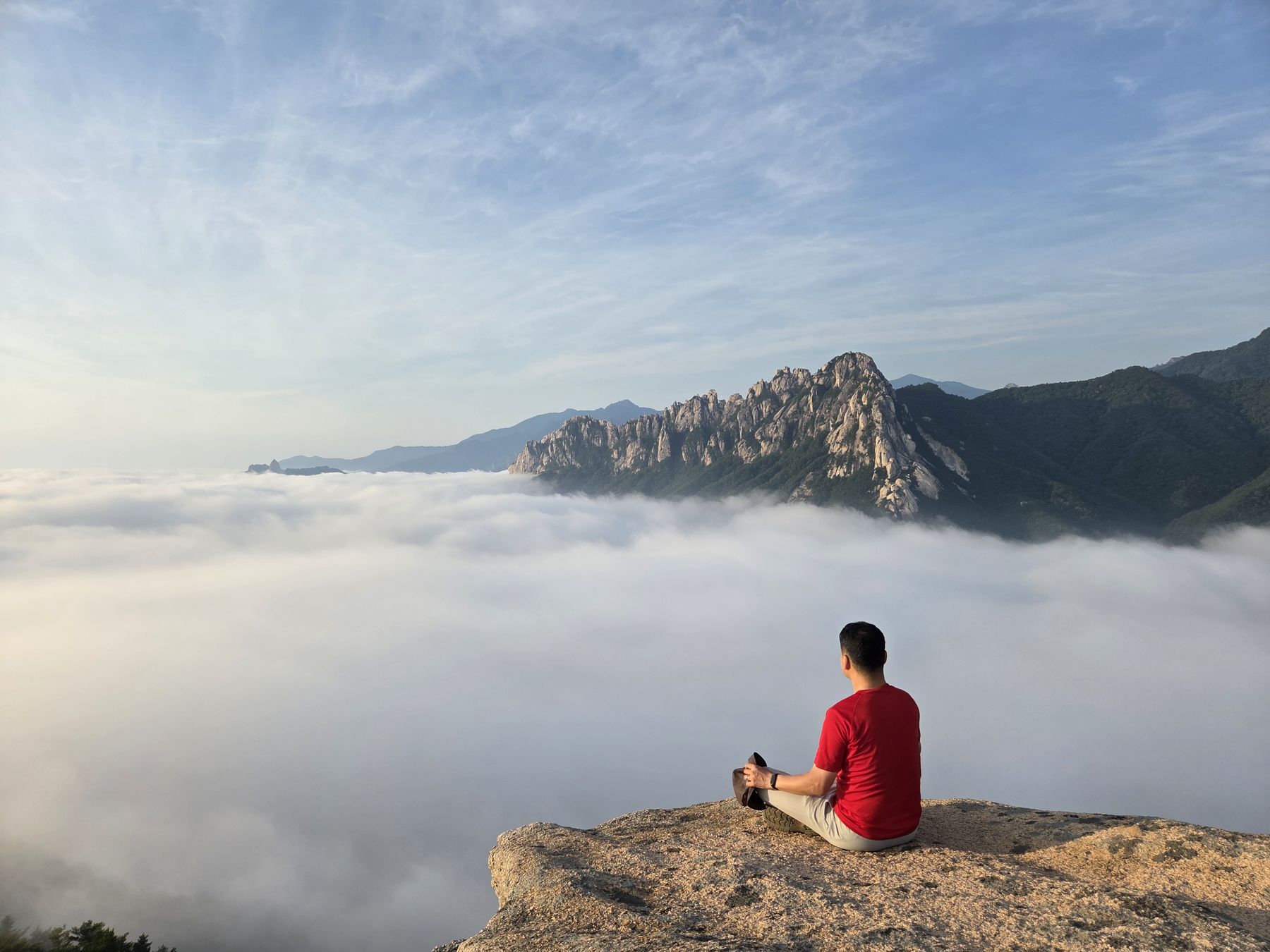
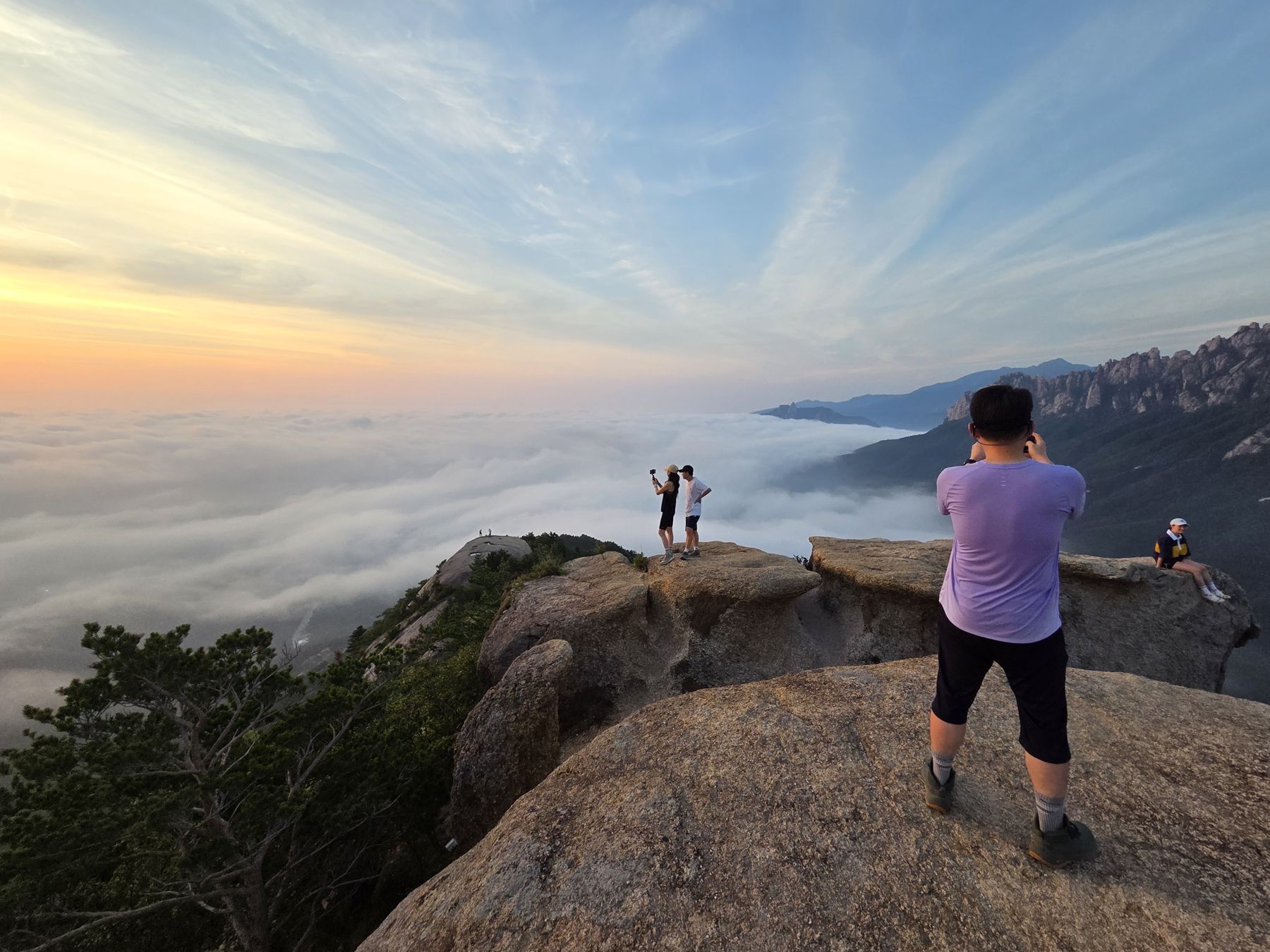
Most people meet Ulsanbawi from Seoraksan's Sokcho side, after a long climb and a crowded queue of stairs. From Sinseondae, on the northern edge of the same range, you see the whole wall at once and from the front: six granite peaks lined up across the valley, close enough to read the cracks.
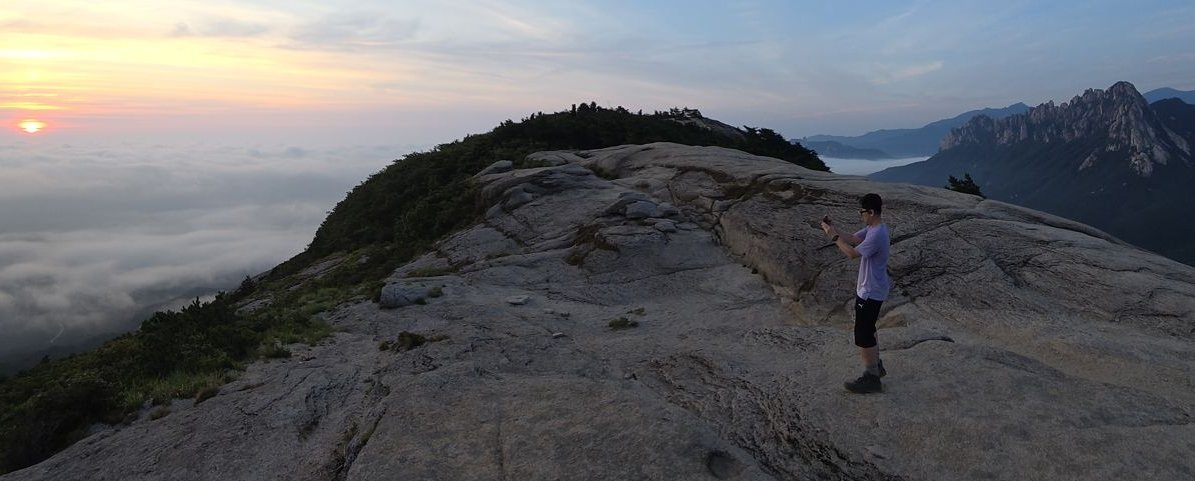
The summit is a broad, open slab of granite rather than a narrow peak. There is room to sit, and on summer mornings the cloud often fills the valleys below, so Ulsanbawi rises out of white like an island.
The route
Goseong County's trail sign calls the whole circuit the Geumgangsan Hwaamsa Forest Trail: 4.1 km, about two hours. It comes in three parts.
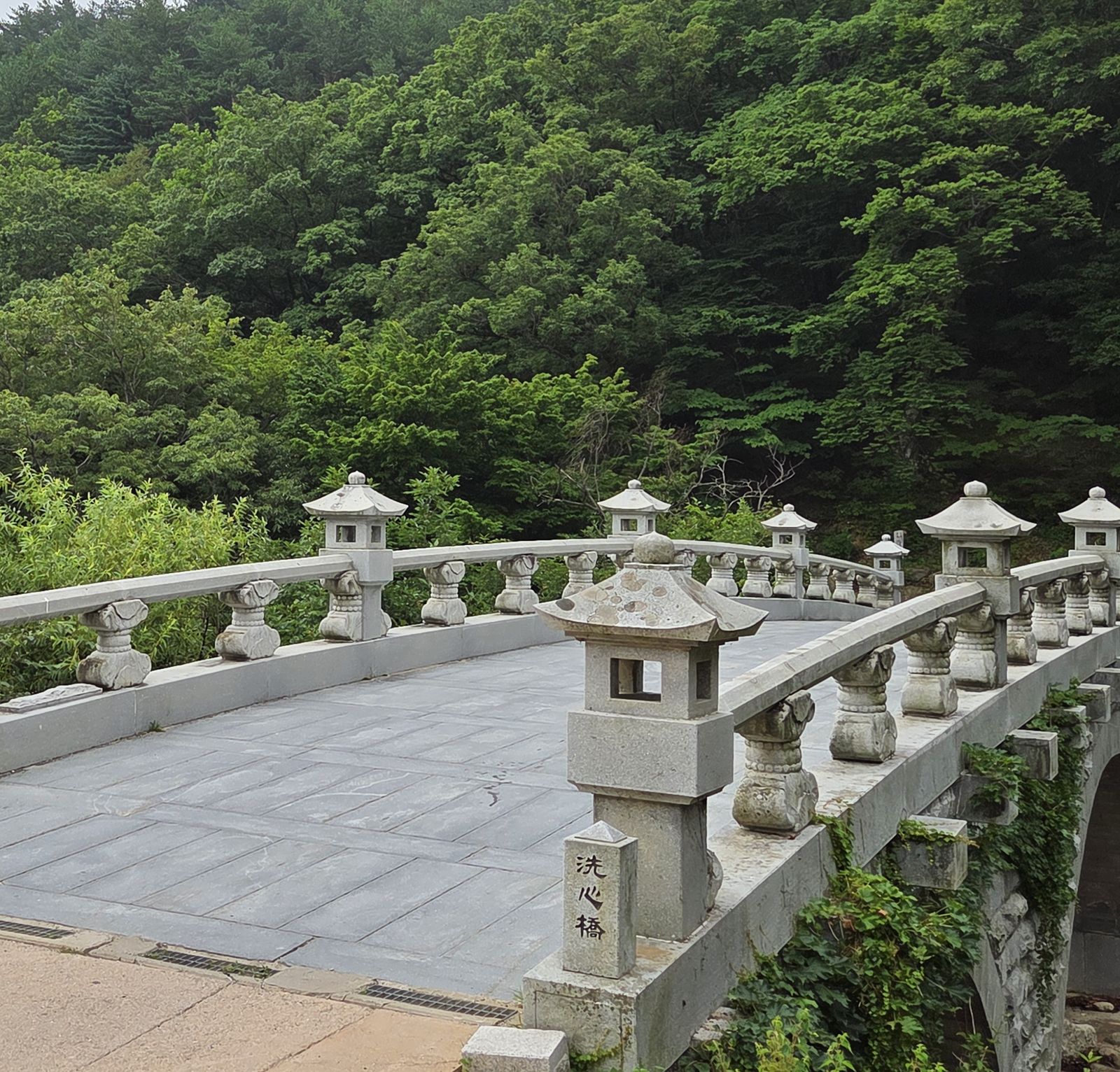
- Parking lot to the temple, 0.8 km. Two lots sit below the temple. The temple path crosses Sesimgyo, the “mind-washing bridge,” and reaches Hwaamsa, where the trail signs begin. 대표 주소: 강원특별자치도 고성군 토성면 화암사길 100
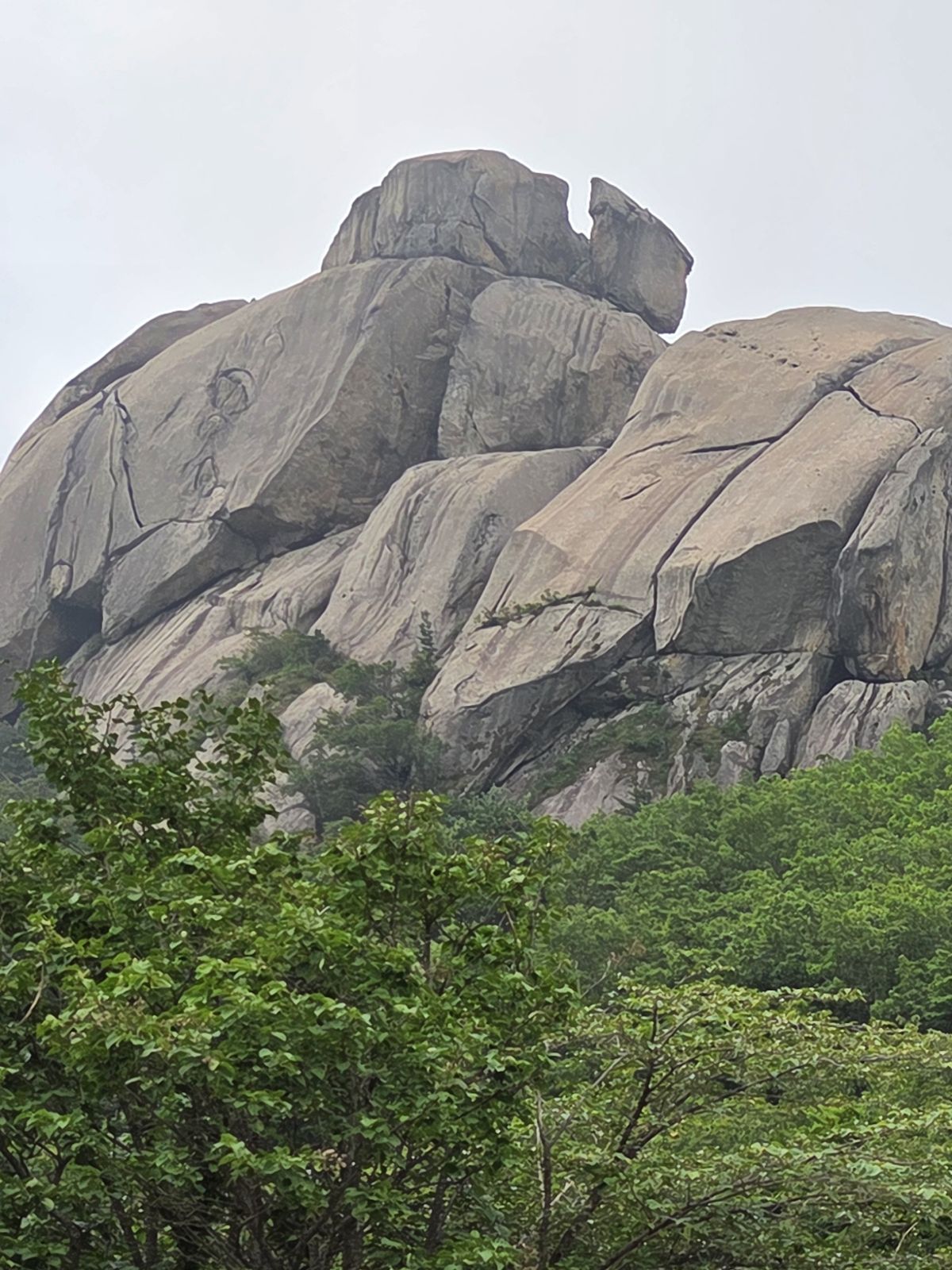
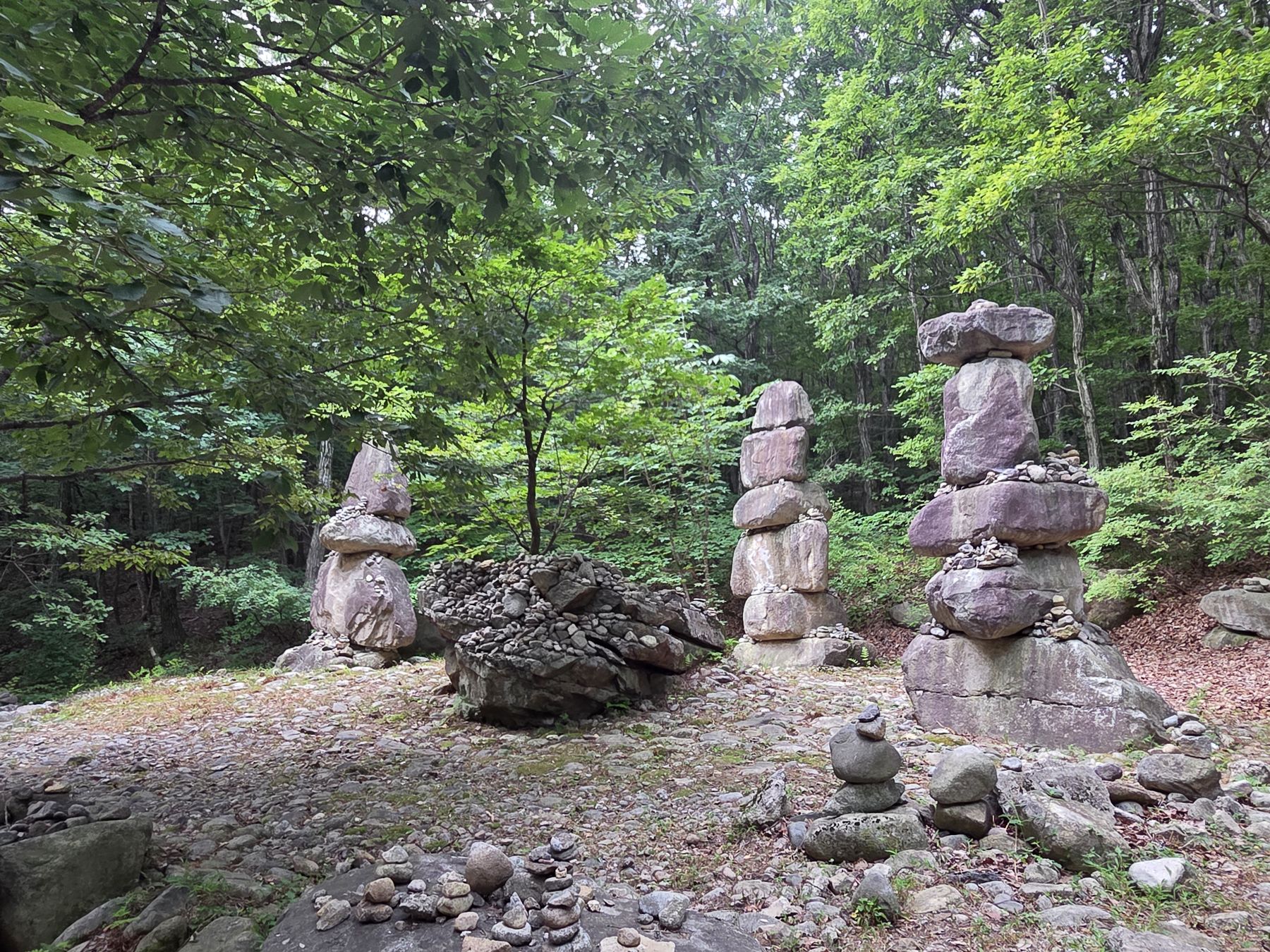
- Up the hiking trail, 1.2 km. The short, steep way. It climbs past Subawi, the huge split boulder above the temple, then Siruttek Rock, layered granite named for a stacked Korean rice cake, where the ridge opens.
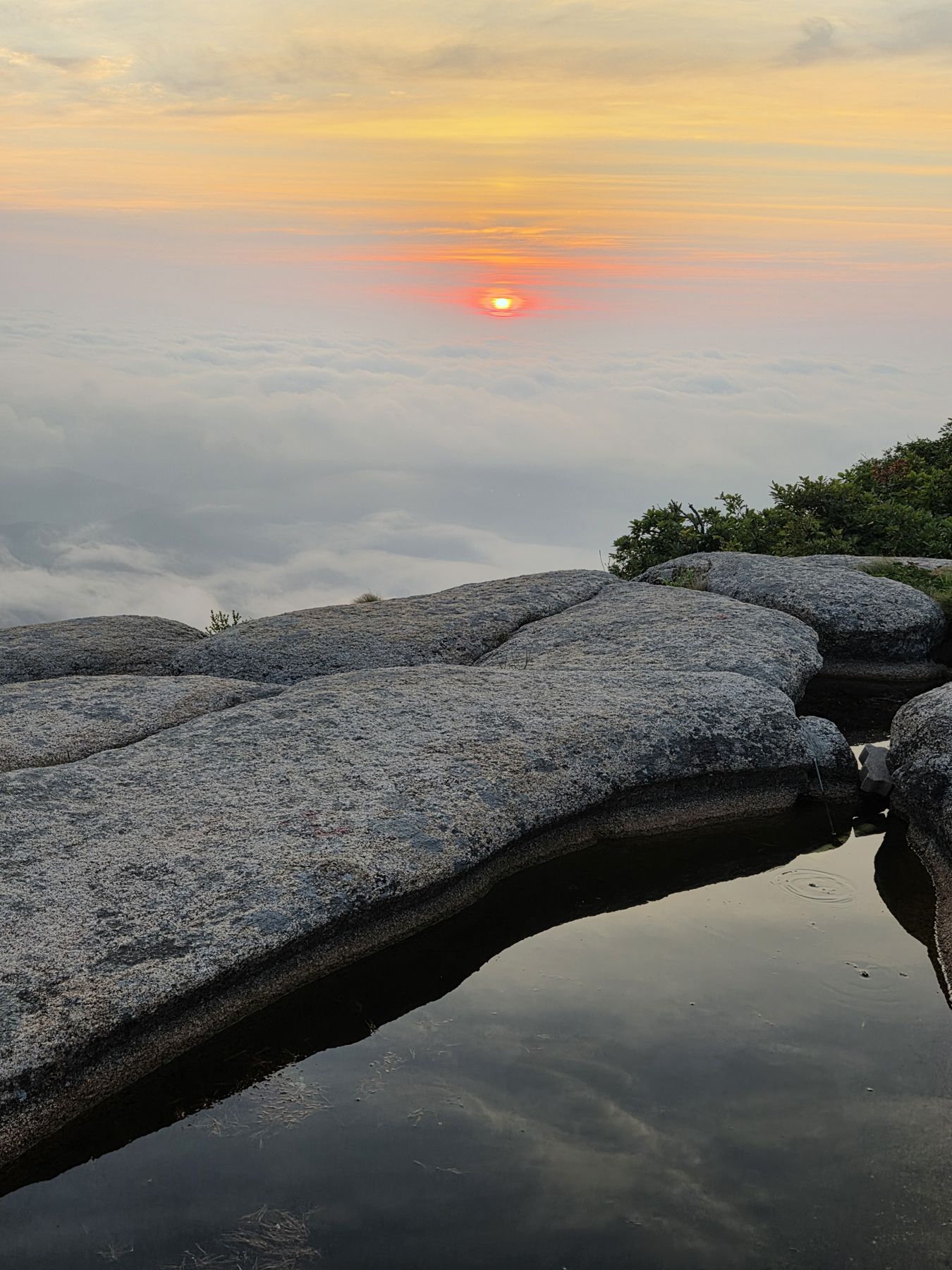
- Sinseondae summit. Open granite with rain pools, the East Sea horizon behind you and Ulsanbawi in front.
- Down the forest-healing trail, 2.0 km. A longer, gentler path that curves back through pine and oak to the temple. It is easier on the knees going down, or take it up if you prefer an even grade.
Go for sunrise
The summit faces east, so the sun comes up over the sea of clouds and lights Ulsanbawi from the side. Starting from the temple around 4:30 a.m. in summer gets you to the top before sunrise. Bring a headlamp; the lower path is forested and dark at that hour.
Back at the temple
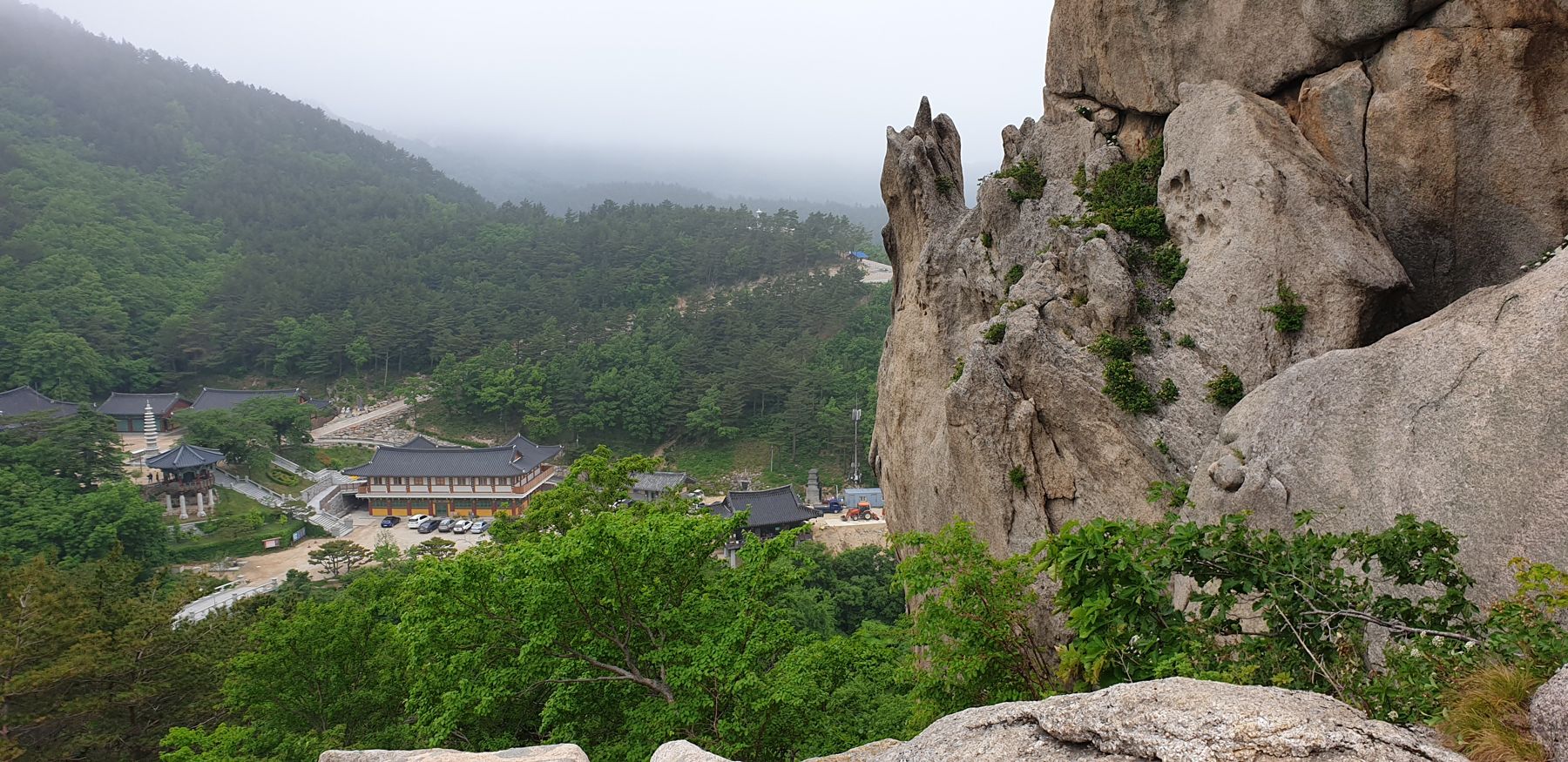
Hwaamsa was founded in 769 and sits in a quiet fold at the foot of the mountain. It is smaller and far calmer than the big temples of Seoraksan. Inside the grounds is Ranyawon 란야원, a traditional teahouse. After an early hike, a cup of jujube or omija tea on its veranda is the best part of the morning.
Getting there
- By car: search “화암사” (Hwaamsa, Goseong) in Naver Map or Kakao Map. The temple is a short drive north of Sokcho.
- Without a car: take an intercity bus to Sokcho, then a taxi to the Hwaamsa parking lot. Public buses toward the temple are infrequent, so check the current timetable before relying on one.
- From Seoul: Sokcho is about 2.5 hours by express bus from Seoul's Express Bus Terminal or Dong Seoul Terminal.
What to bring
- Shoes with good grip; the granite slabs are smooth and slick when wet.
- A headlamp for a sunrise start, and a light jacket for the wind on top.
- Water. There is nothing to buy between the temple and the summit.