
Quiet Korea · Seosan, South Chungcheong · Reading Rooms
The Other Buseoksa
Korea has two temples named Buseoksa. The one in Yeongju is among the best known in the country, a UNESCO World Heritage site. The one in Seosan, on Dobisan in South Chungcheong, is far less famous. Both are old, and both sit partway up a mountain with a wide view. The Seosan temple adds a tea house on a pavilion terrace and an unusual number of places to sit, which makes it a good temple for reading and working.
| Buseoksa, Yeongju | Buseoksa, Seosan | |
|---|---|---|
| Province | North Gyeongsang | South Chungcheong |
| Mountain | Bonghwangsan | Dobisan, 352.8 m |
| Known for | UNESCO World Heritage site, the Muryangsujeon hall | Quiet grounds, a tea house, a view over Cheonsu Bay |
| Founded | 676, by tradition | 677, by tradition |
The two temples share their Chinese characters, 浮石寺, which mean "floating stone", and a founding tradition that credits the monk Uisang. Yeongju's temple is dated to 676 and Seosan's to 677. Seosan's is the quieter of the two.
Halfway up Dobisan
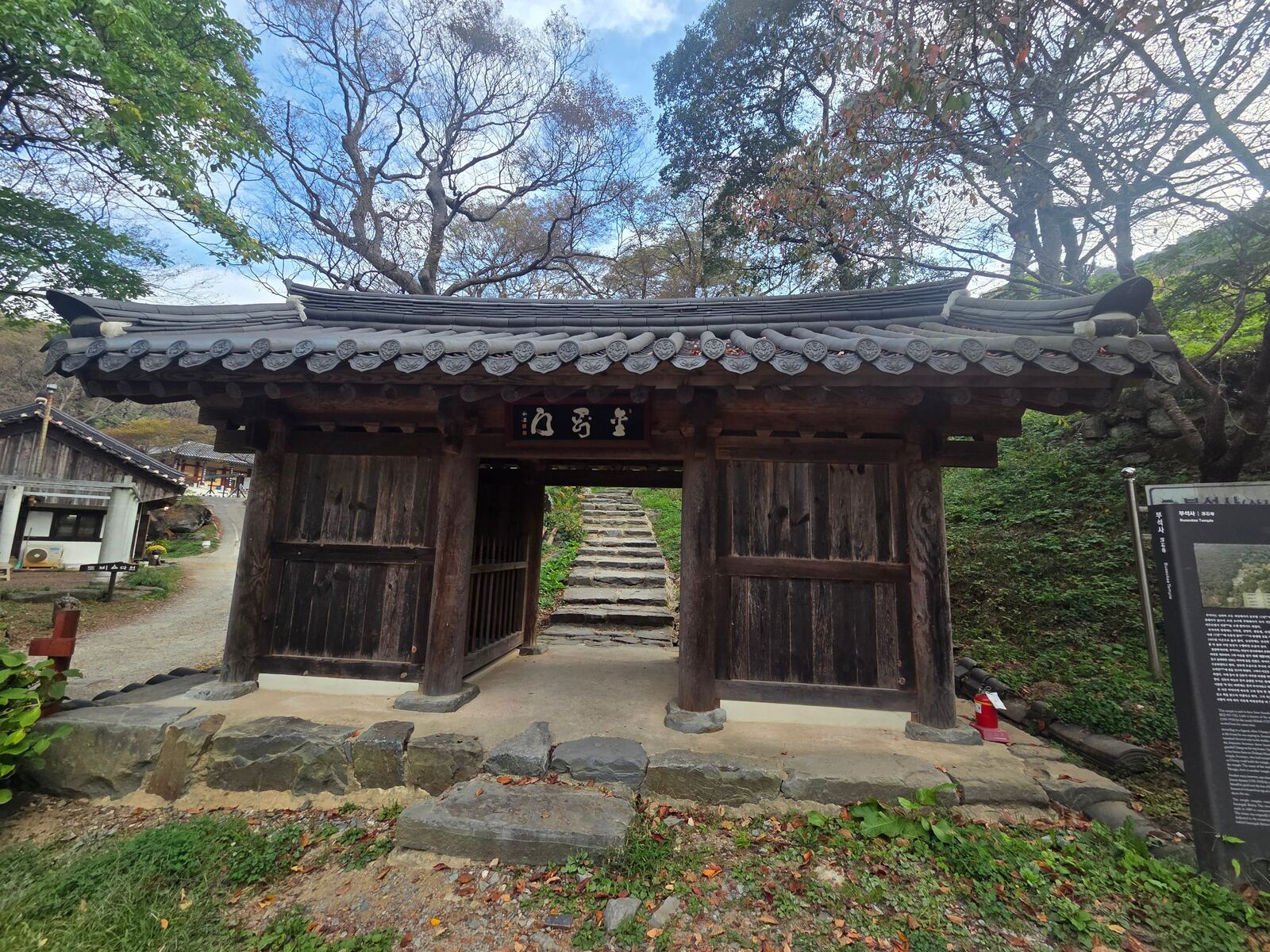
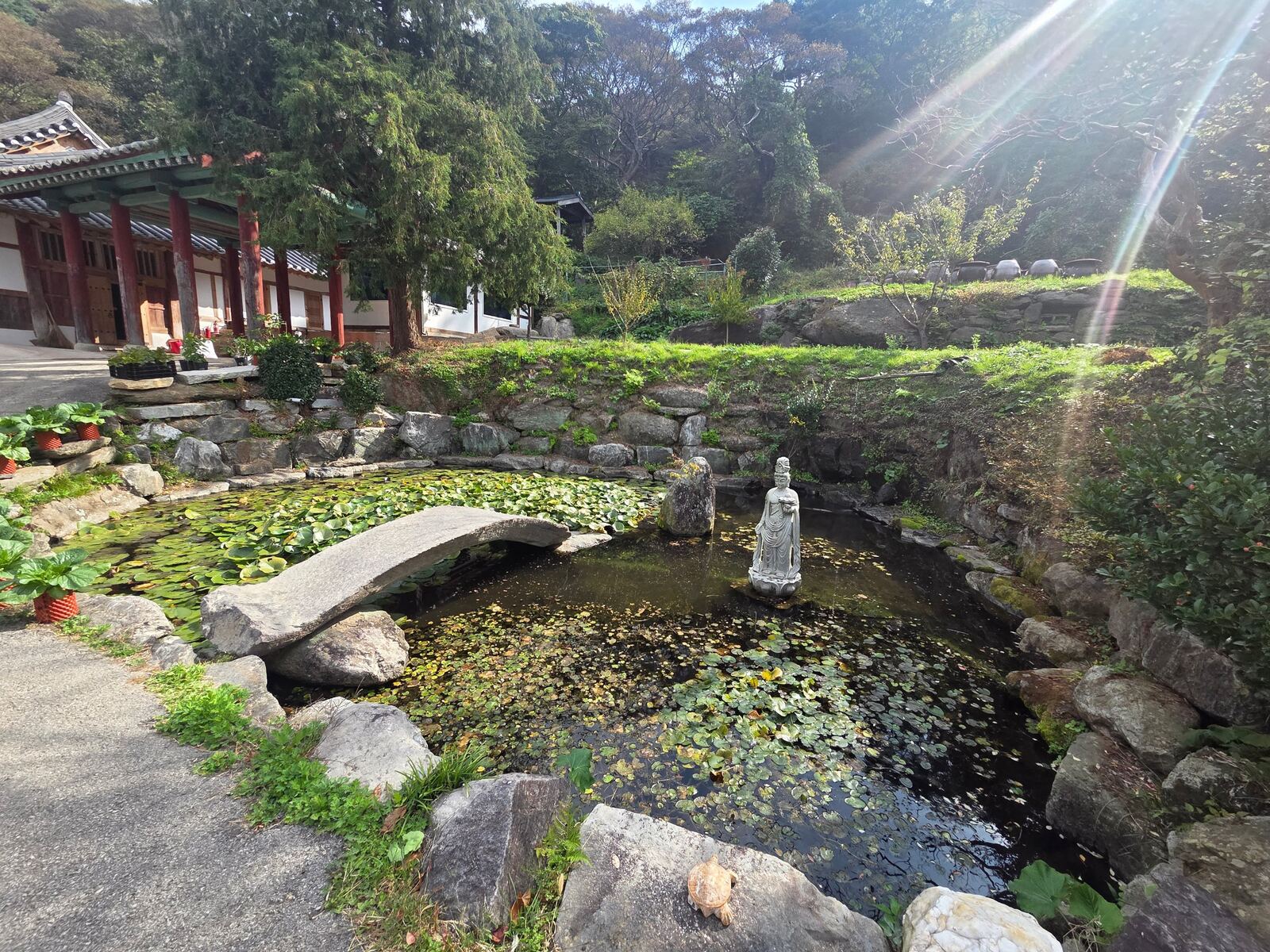
By car, the gate is about ten minutes from the main road. Beyond a wooden gate, stone steps climb into the compound. The main hall, Geungnakjeon, enshrines Amitabha, and in 1984 the province designated the temple a cultural heritage material.
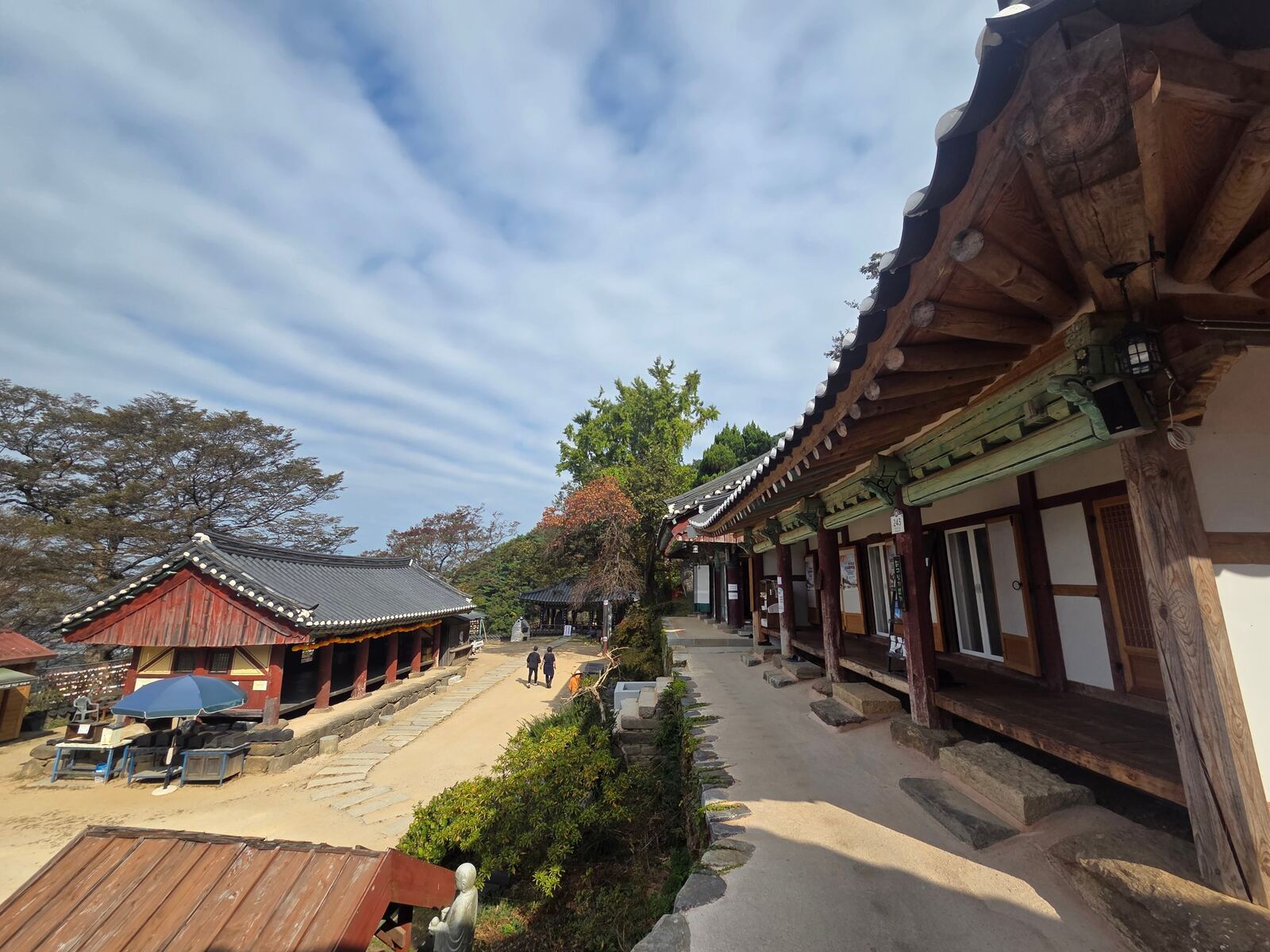
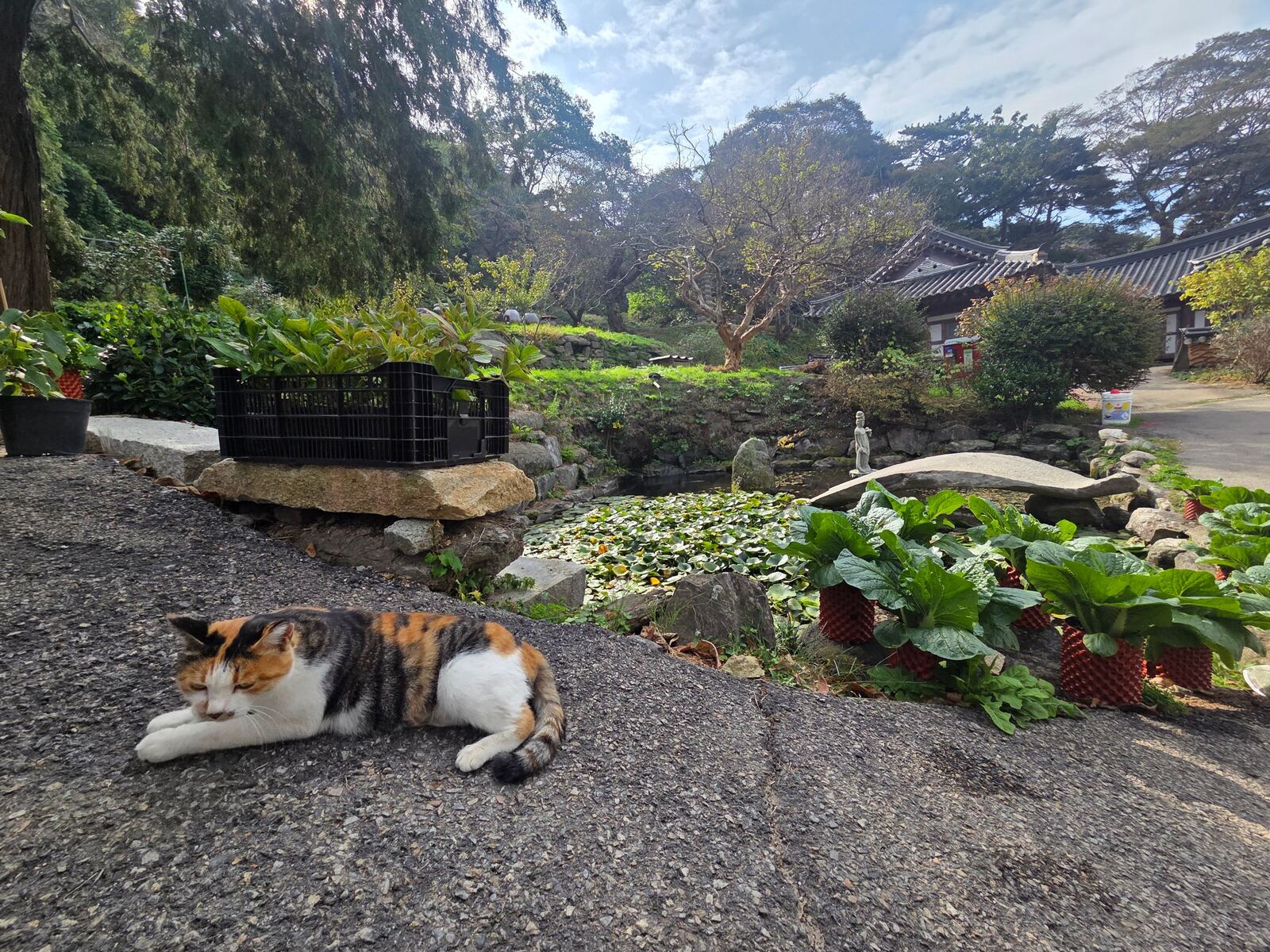
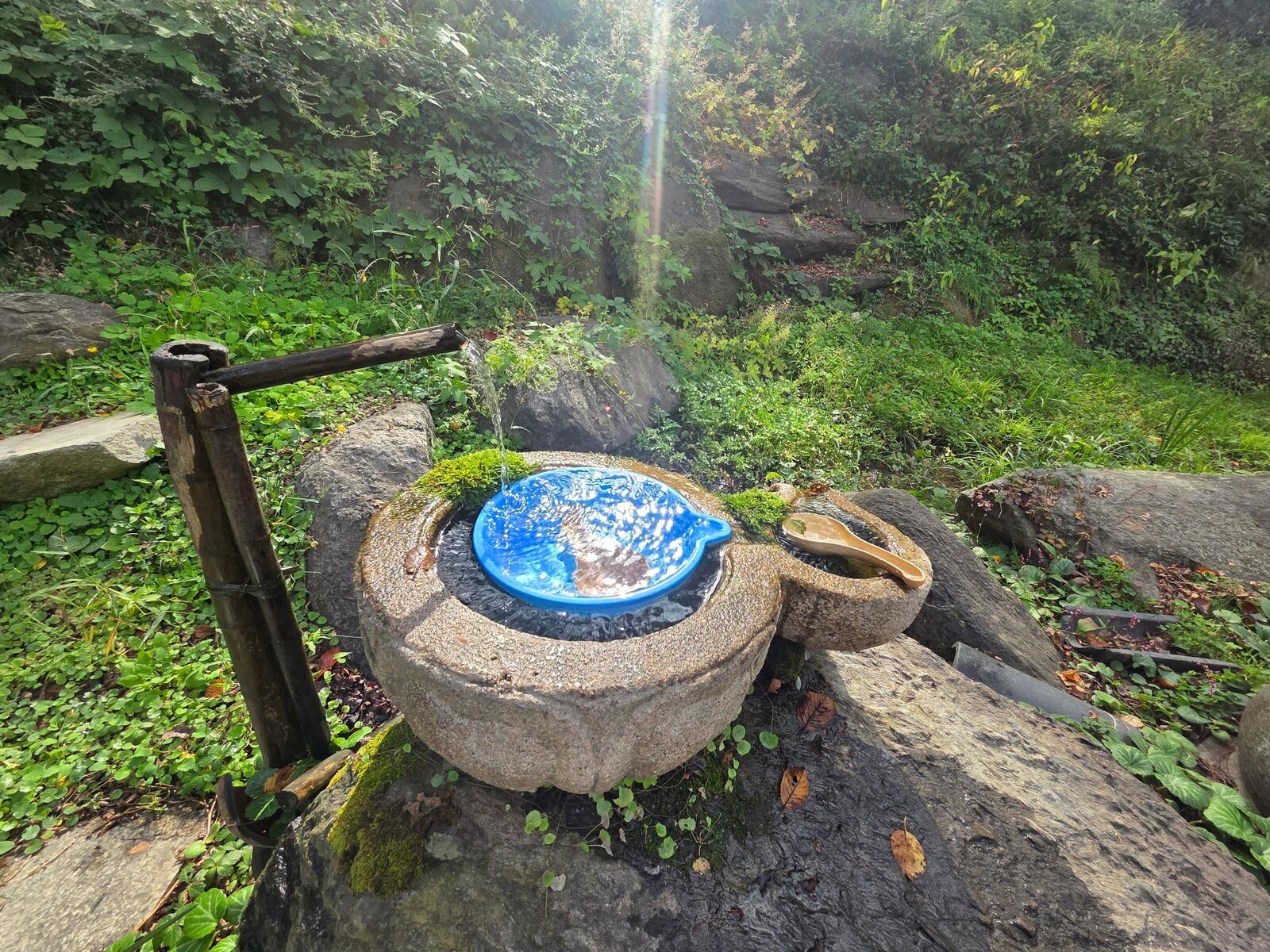
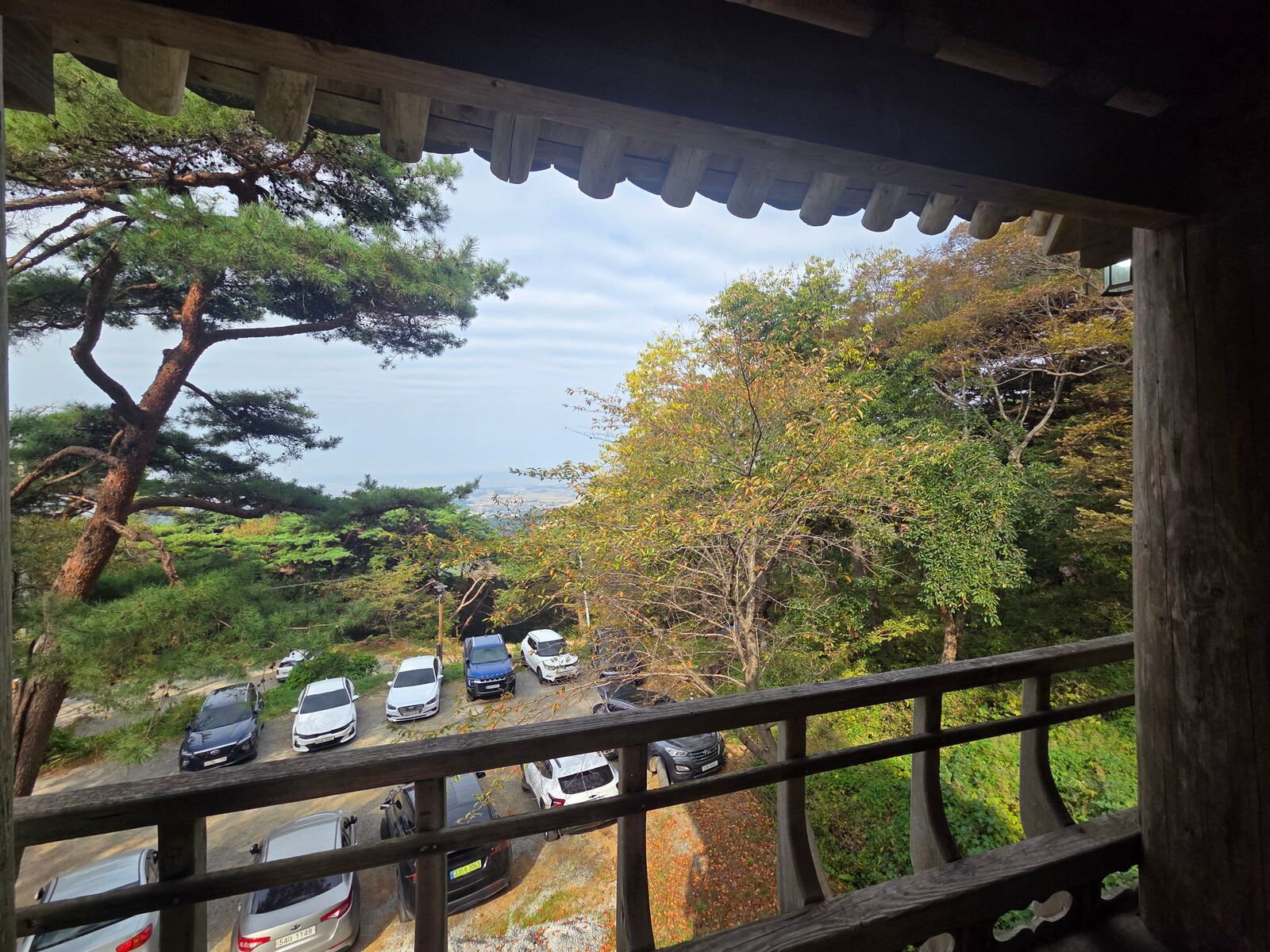
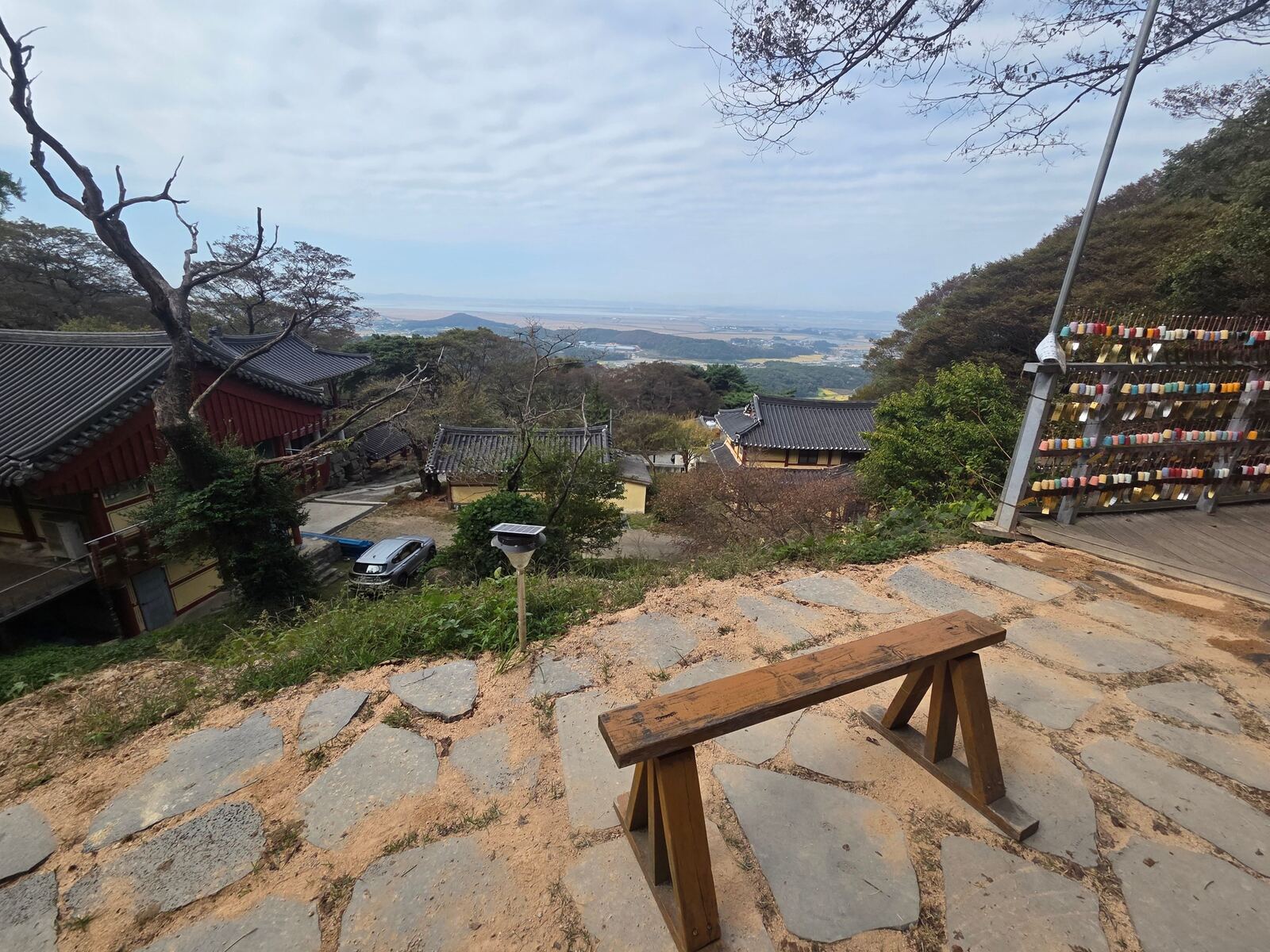
Dobisan rises to about 353 meters and stands almost alone near the coast, so the temple looks out over farmland and the inlet of Cheonsu Bay, a habitat for migratory birds. The compound itself is small and easy to walk.
Tea on the terrace
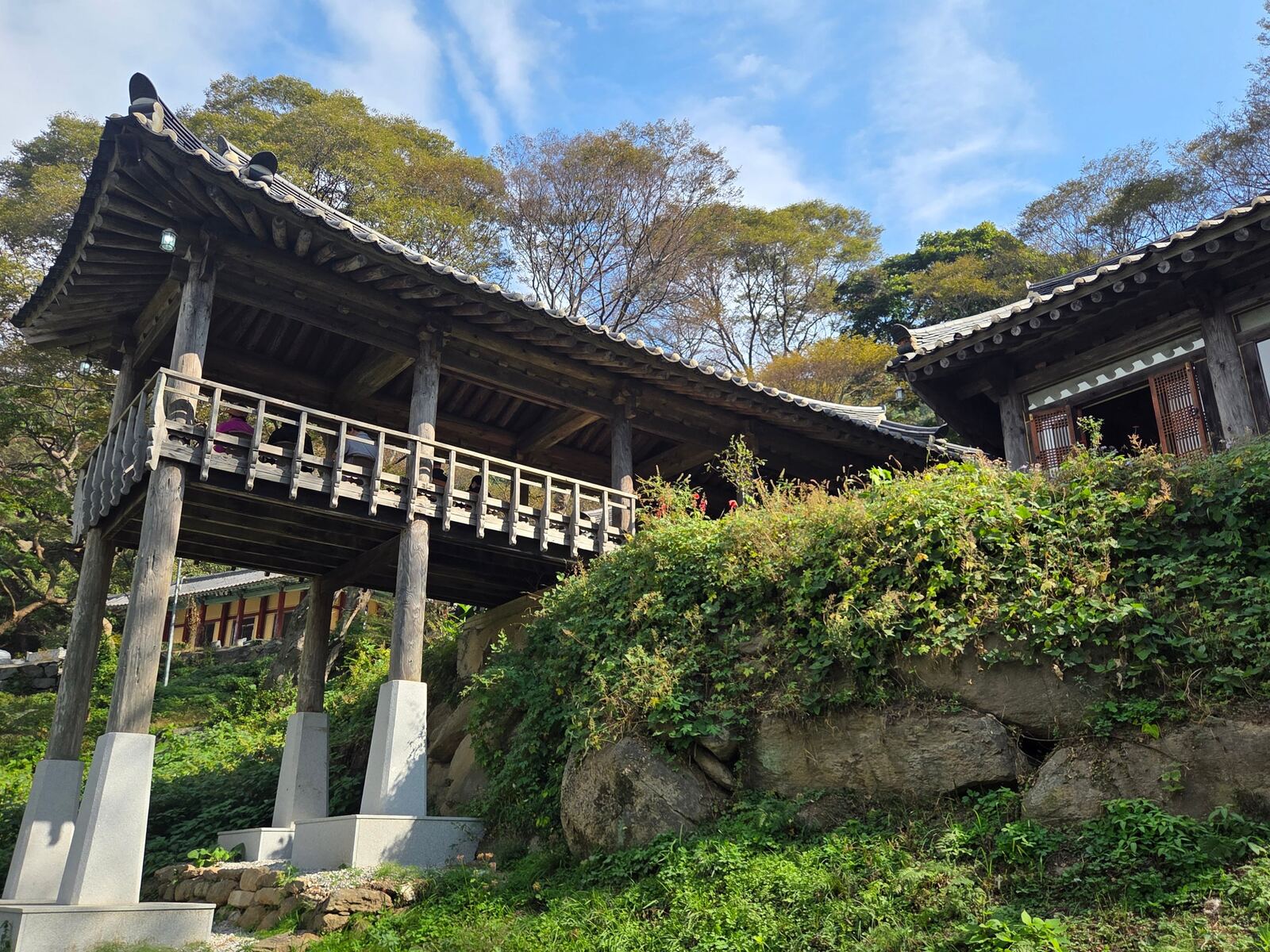
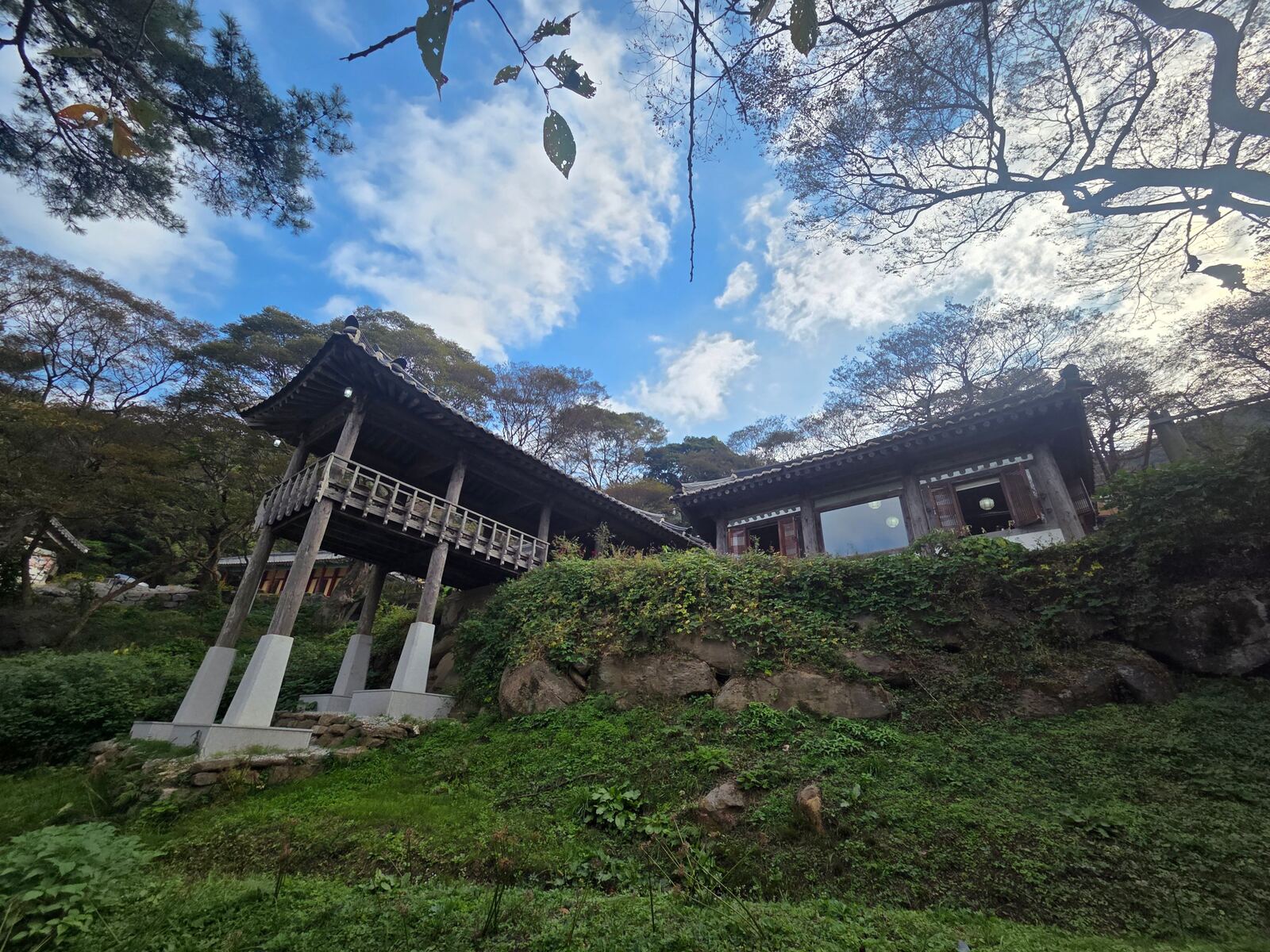
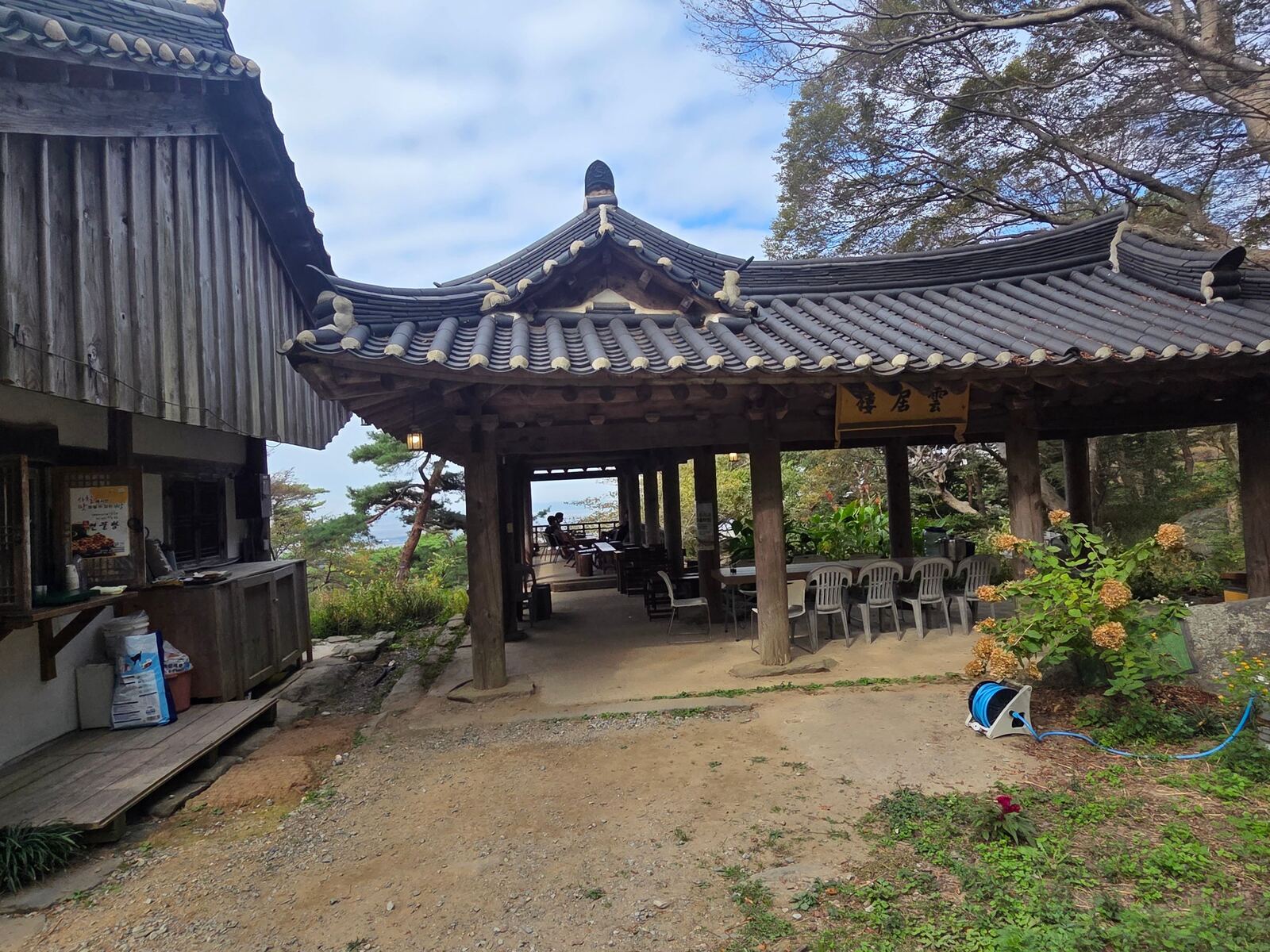
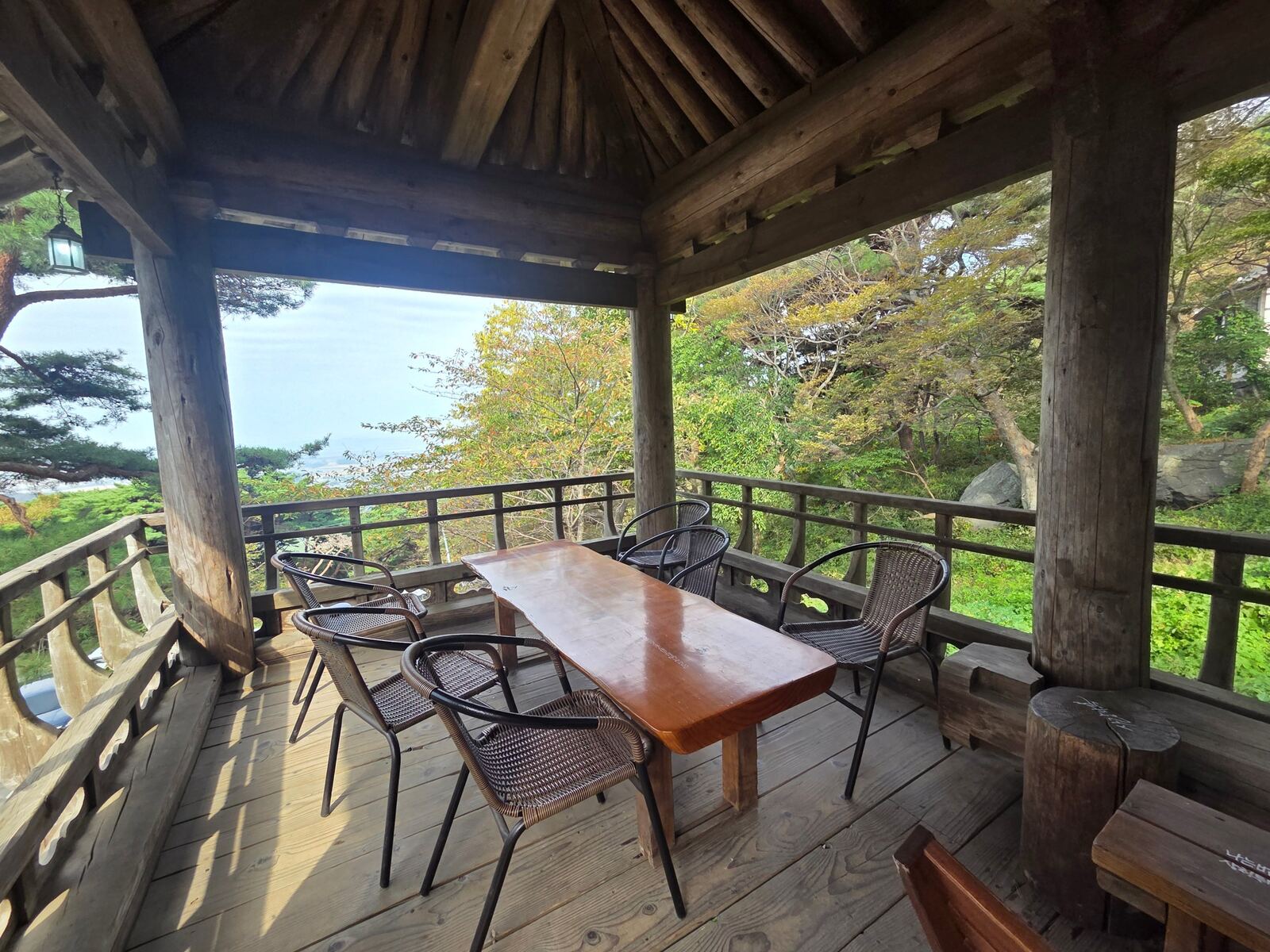
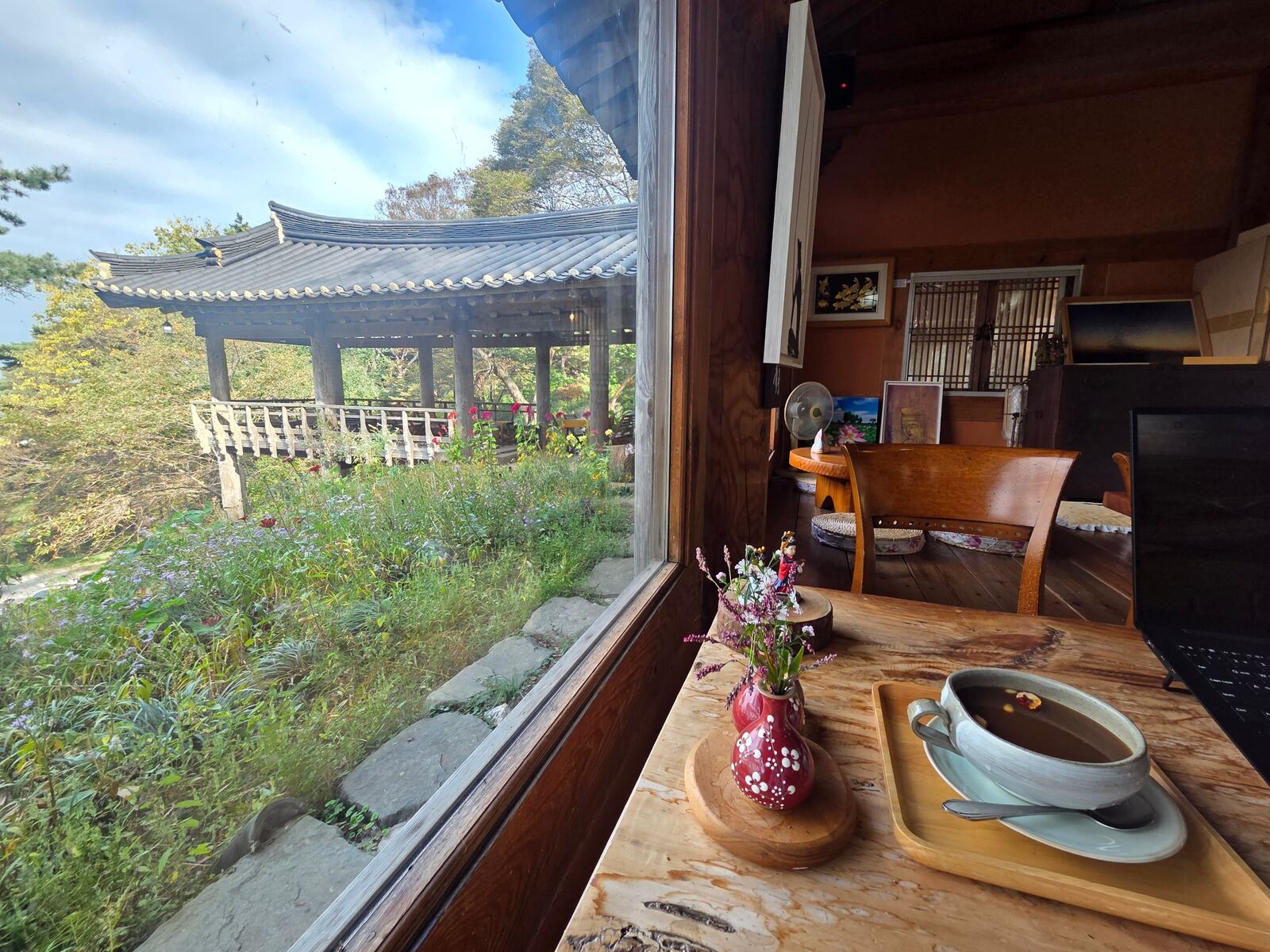
Dobisan Dawon (도비산다원) is the temple's tea house. It operates together with Ungeoru (운거루), a pavilion whose name reads as "cloud-dwelling pavilion". The terrace is built out over the slope in the traditional style, and you drink your tea looking across the Cheonsu Bay area.
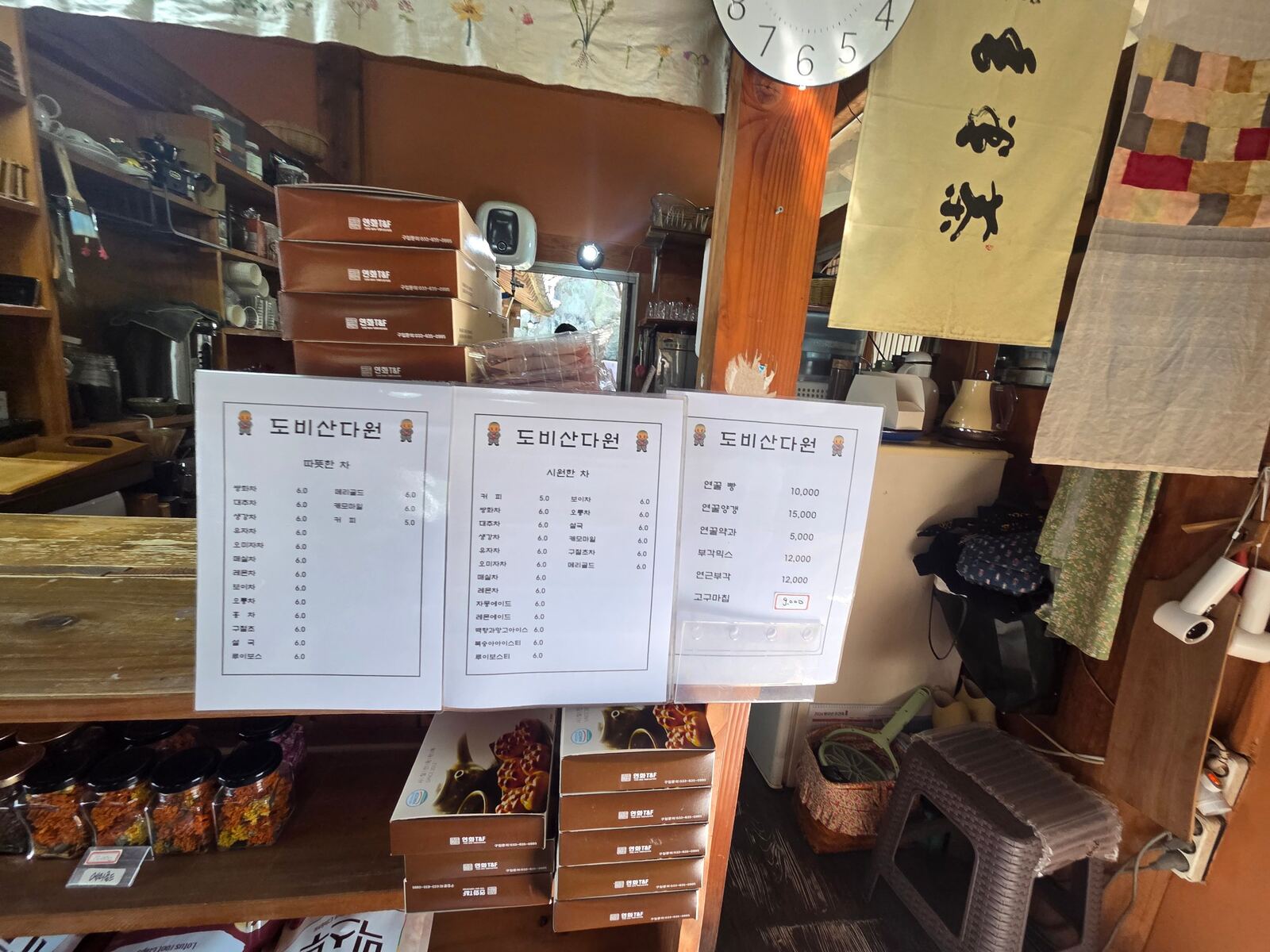
The menu has coffee, and it leans toward Korean teas. Daechu (jujube) and omija (five-flavor berry) tea are made in house, and the list also includes ssanghwa, ginger, citron, plum and several herbal teas. Nearly every tea is about ₩6,000 and coffee is ₩5,000.
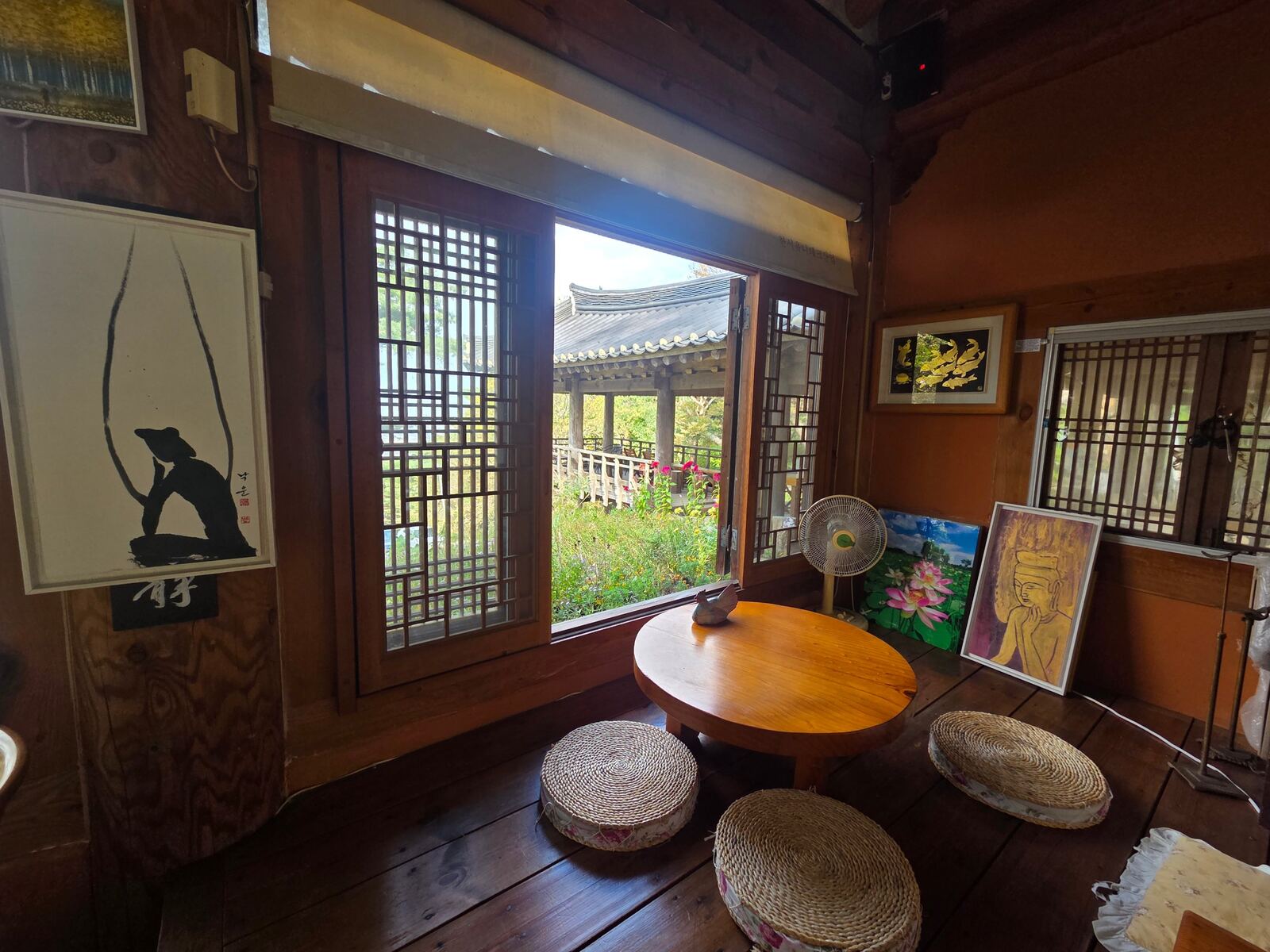
Inside is a hanok hall with exposed log rafters and clay-colored walls. Shelves hold teacups and vases, and heavy slab tables stand under lattice windows. A second room has floor seating, with a round table and straw cushions below a framed photograph of lotus.
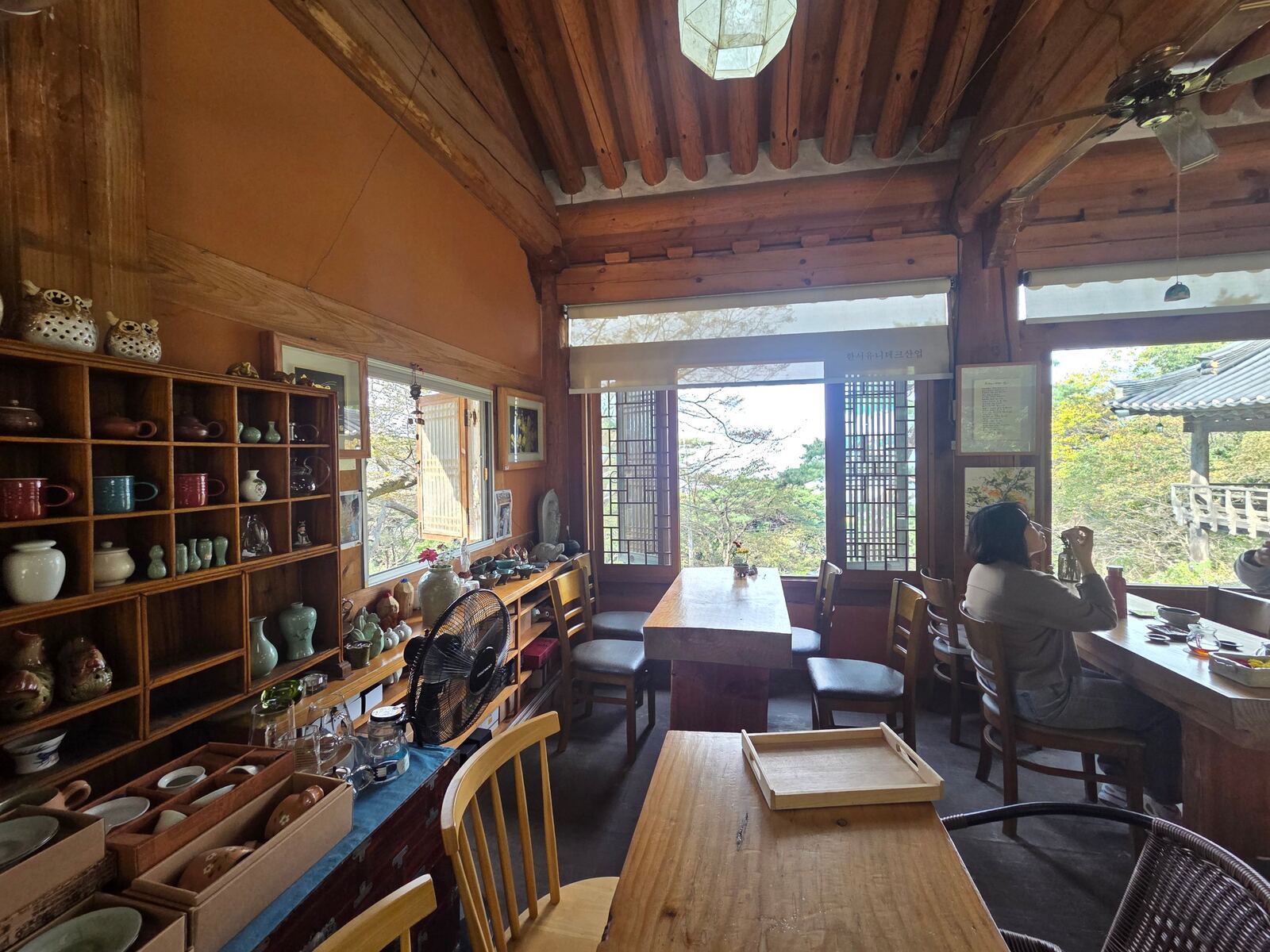
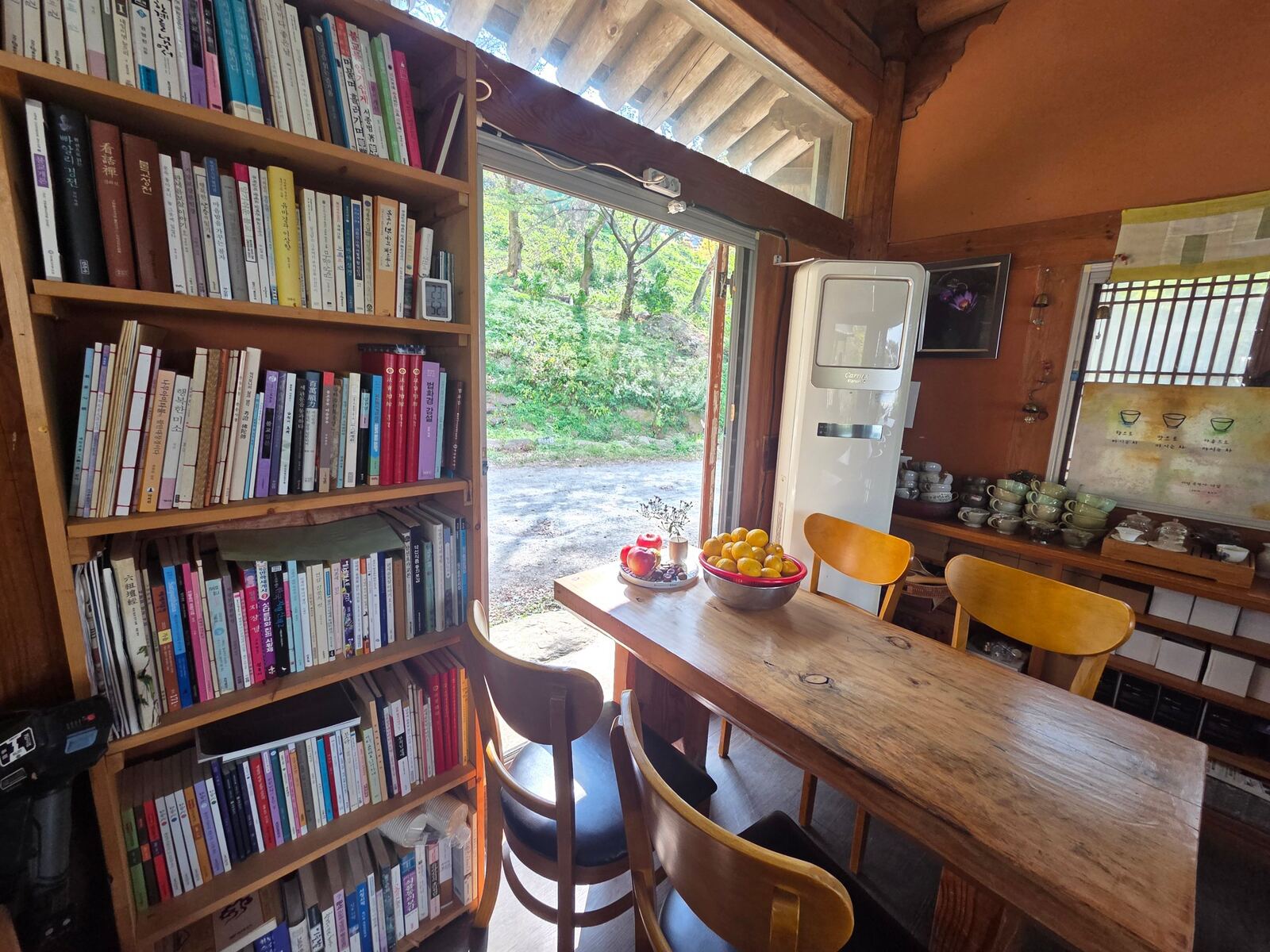
A shelf of books on Buddhism and Seon stands by the open door, so there is something to read even if you forgot a book. The counter also sells lotus-honey sweets and crisp lotus-root snacks.
Somewhere to sit, everywhere
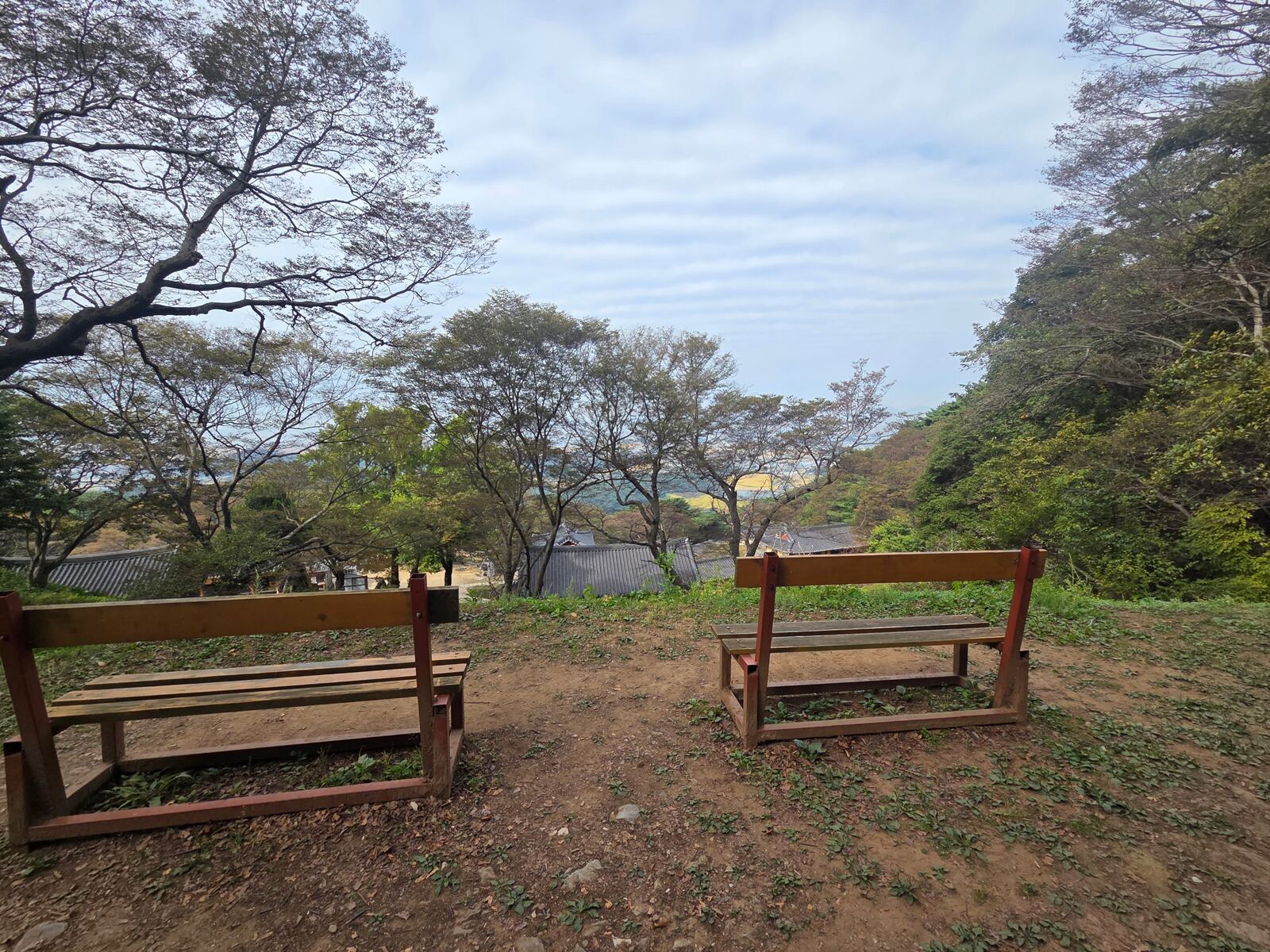
For a temple, Seosan's Buseoksa has an unusual number of places to sit. Benches face the view in more than one spot, and a plain wooden bench stands on the stone path at the overlook. That makes a good rhythm: read a chapter, walk to the next bench, read another.
A cave for one
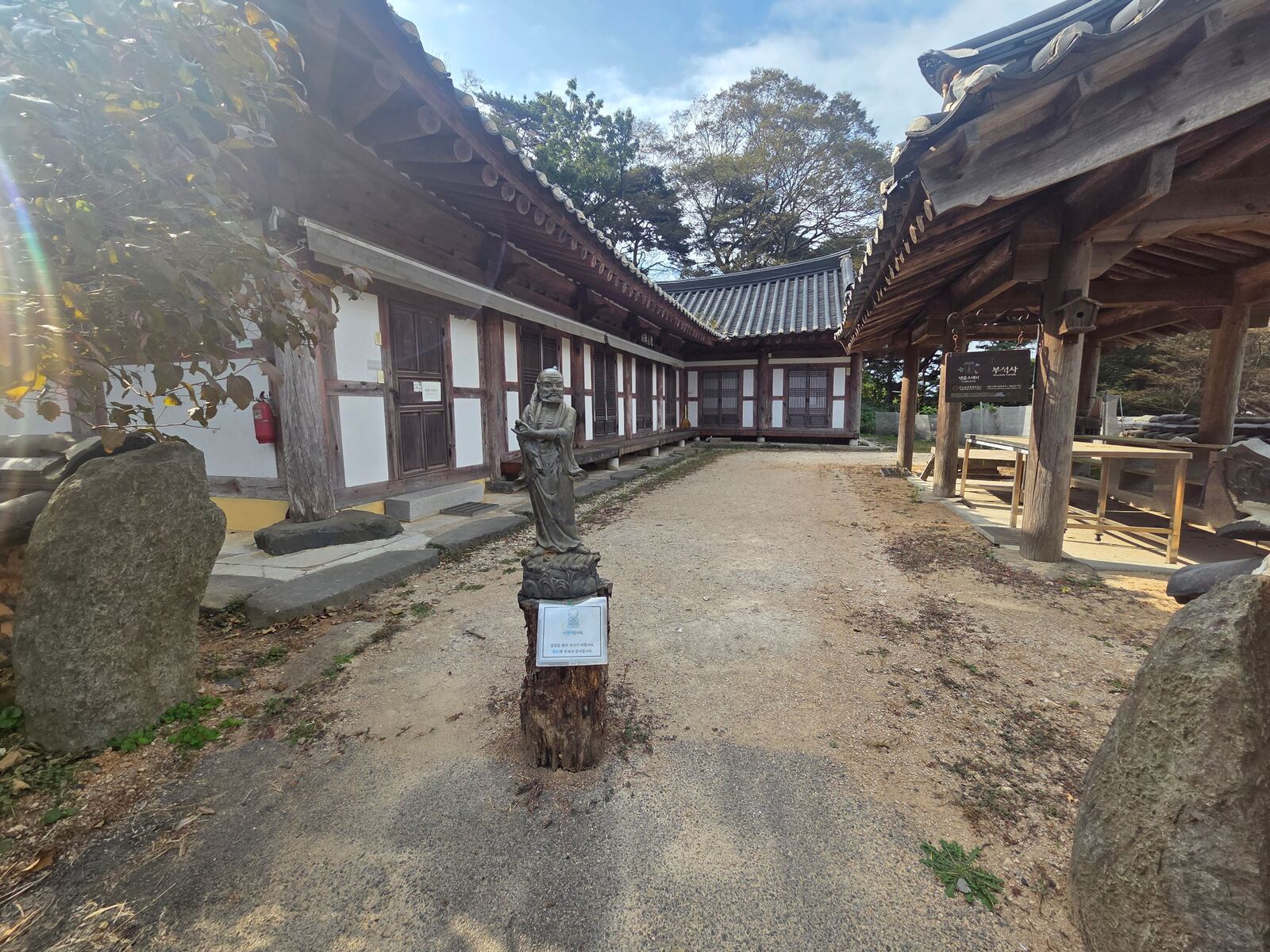
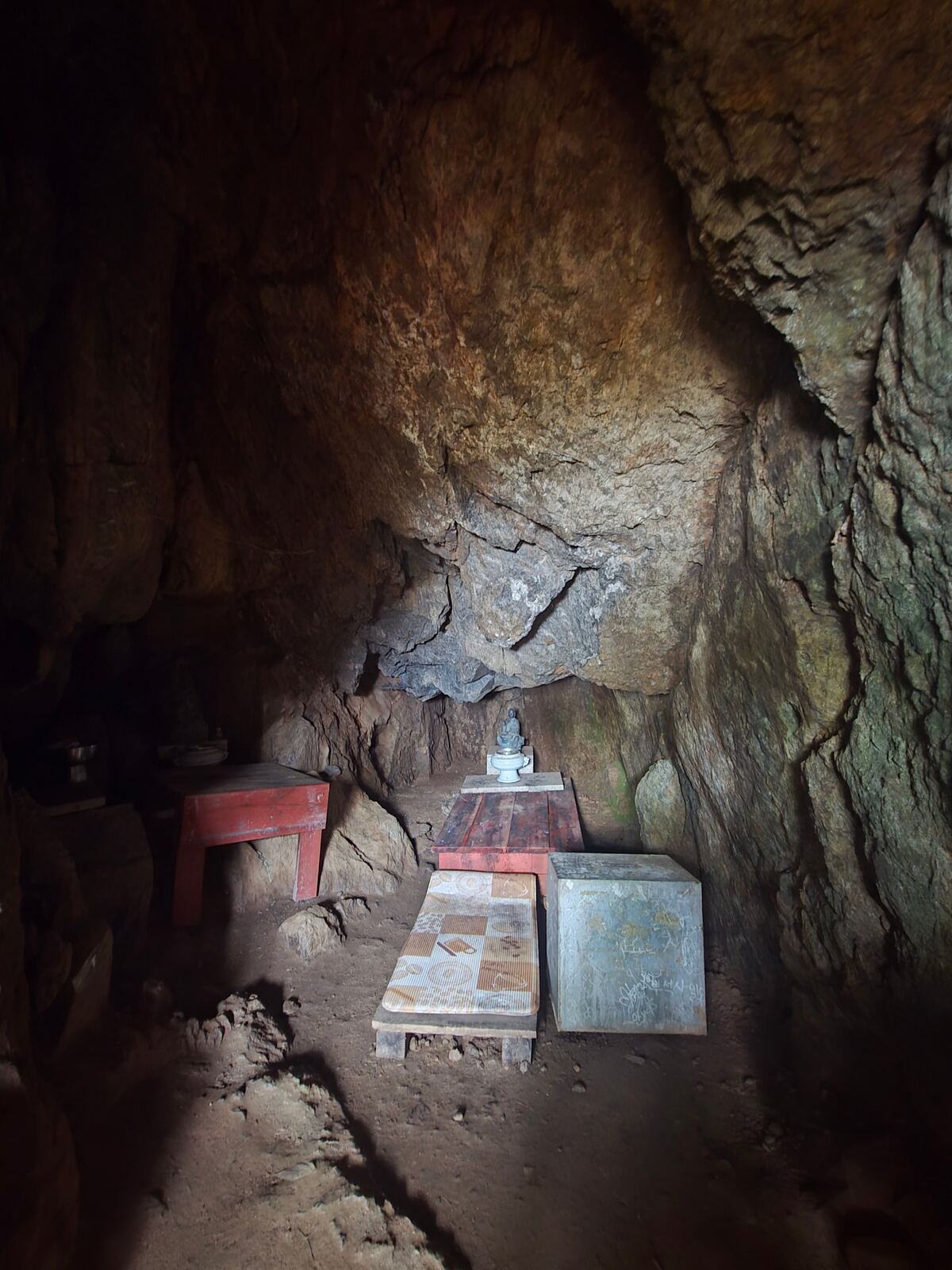
Mangong (만공) is remembered as one of the leading Seon masters of modern Korea, and he stayed at Buseoksa. The "Buseoksa" plaque in the Simgeomdang hall is in his calligraphy. On the hillside above the compound is the cave where he practiced wall-facing meditation, small enough for one person.
The grounds hold other historic spaces besides the cave.
Visiting
Buseoksa
- Address
- 243 Buseoksa-gil, Buseok-myeon, Seosan
충남 서산시 부석면 부석사길 243 - Open
- Year-round, no closing days
- Getting there
- By car, about 10 minutes from the main road to the gate
- Parking
- At the temple
- Phone
- 041-662-3824
- Also
- Templestay is offered
Dobisan Dawon
- Where
- Inside the temple grounds, with the Ungeoru pavilion
- Coffee
- ₩5,000
- Tea
- About ₩6,000, including house-made jujube and omija
- Seating
- Hall, floor-seating room, pavilion terrace
- Hours
- Not posted online, so go in daytime
Prices are from the menu board in my photo and can change. Check with the temple before a long drive. Naver Map and Kakao Map work best in Korea.
Temple details from ktriptips.com, Seoul Shinmun and Hangyo. Photos taken in autumn.