
Quiet Korea · Seoul · Dobong-gu · Reading Rooms
A Hanok Library at the Foot of Bukhansan
Most visitors meet hanok in Bukchon or Ikseon-dong, sharing the alleys with crowds and selfie sticks. In Banghak-dong there is one you can sit in all afternoon.
Most visitors to Seoul find hanok, traditional Korean houses, in Bukchon or Ikseon-dong, where they share the alleys with crowds and selfie sticks. In Banghak-dong, in the far north of the city, there is a hanok you can sit in for the whole afternoon. It is a public library, it is free, and on a weekday morning you may have a corner of it to yourself.
Small, but well thought out
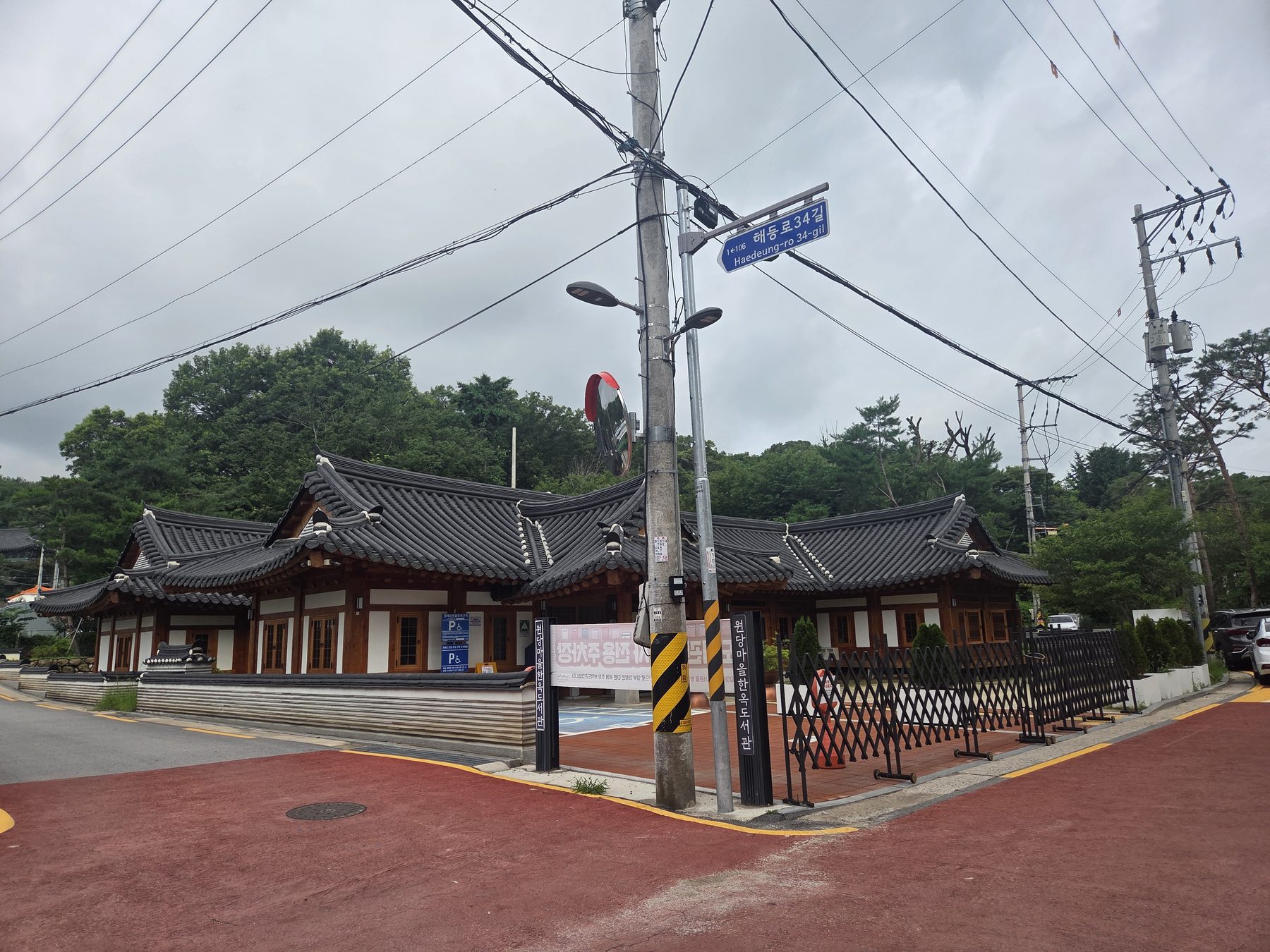
Wondang Village Hanok Library is not large. It is a single-story wooden building with curved tile roofs, wrapped around a small inner courtyard. What makes it special is how many different ways it lets you sit.
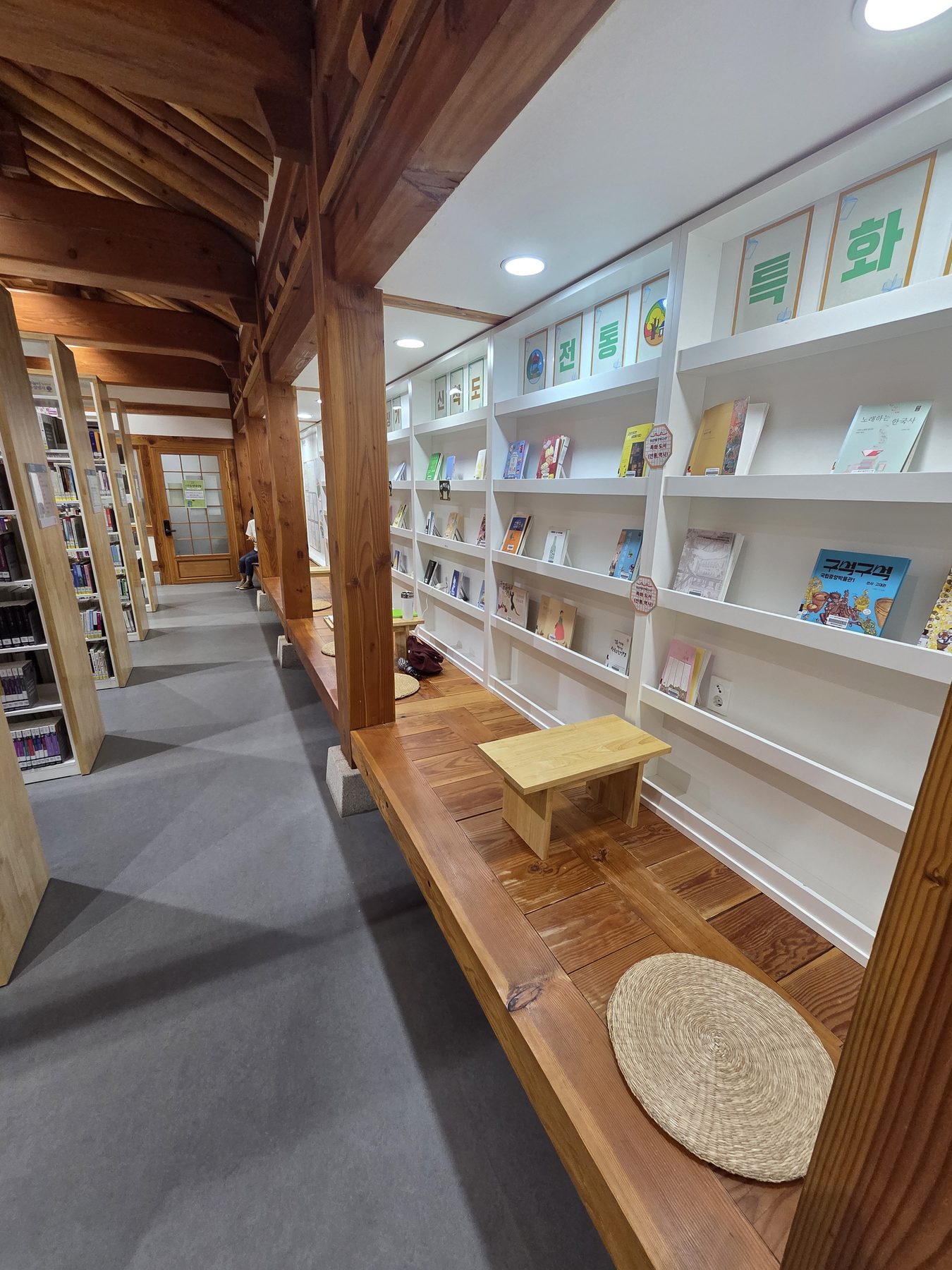
Along one corridor, a raised wooden toenmaru, the narrow veranda floor of a traditional house, has been brought indoors. It has straw cushions and low tables, so you can sit cross-legged with a book the way people once did on a summer porch. The shelves above it hold a featured collection on Korean tradition and history.
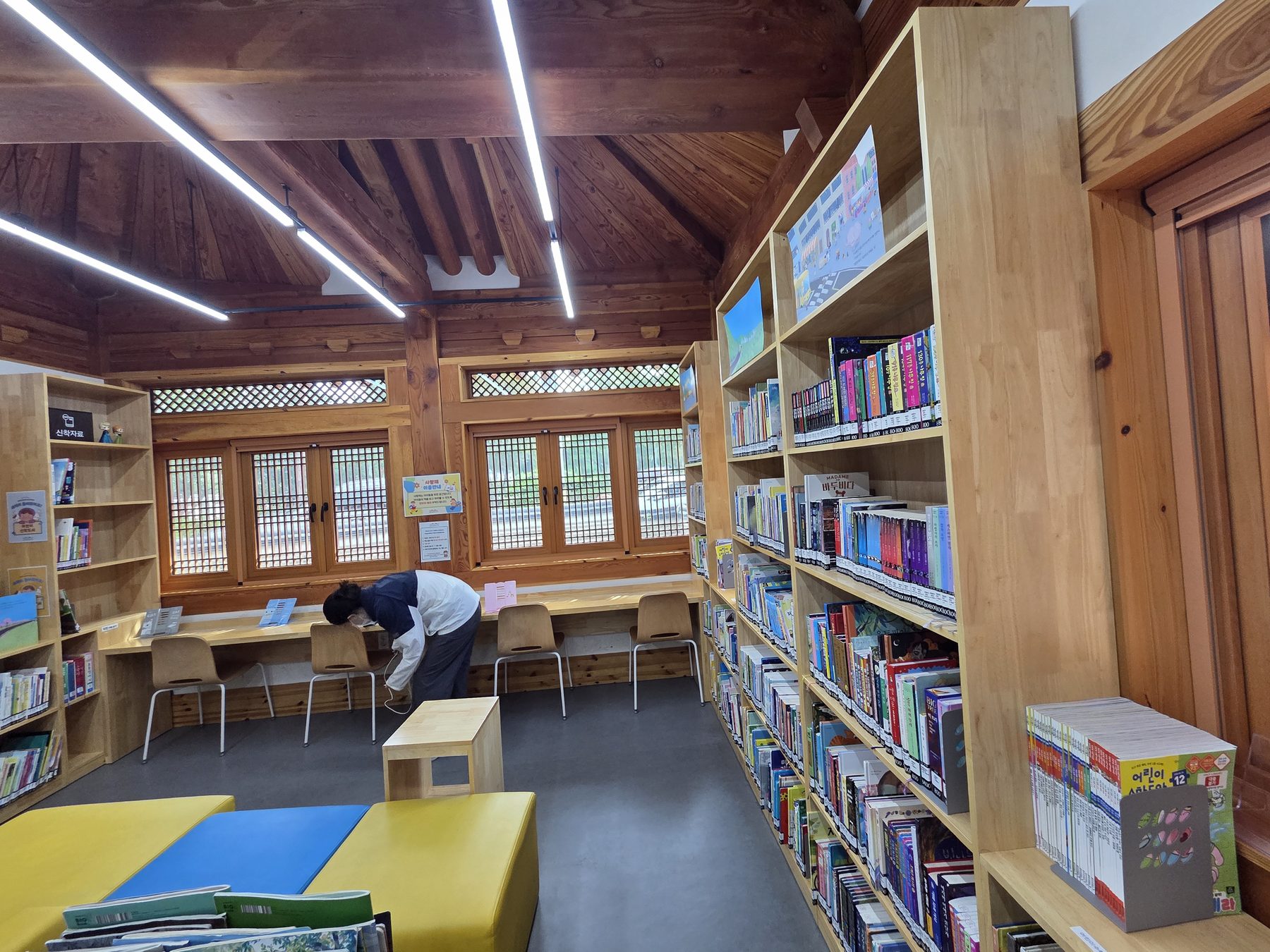
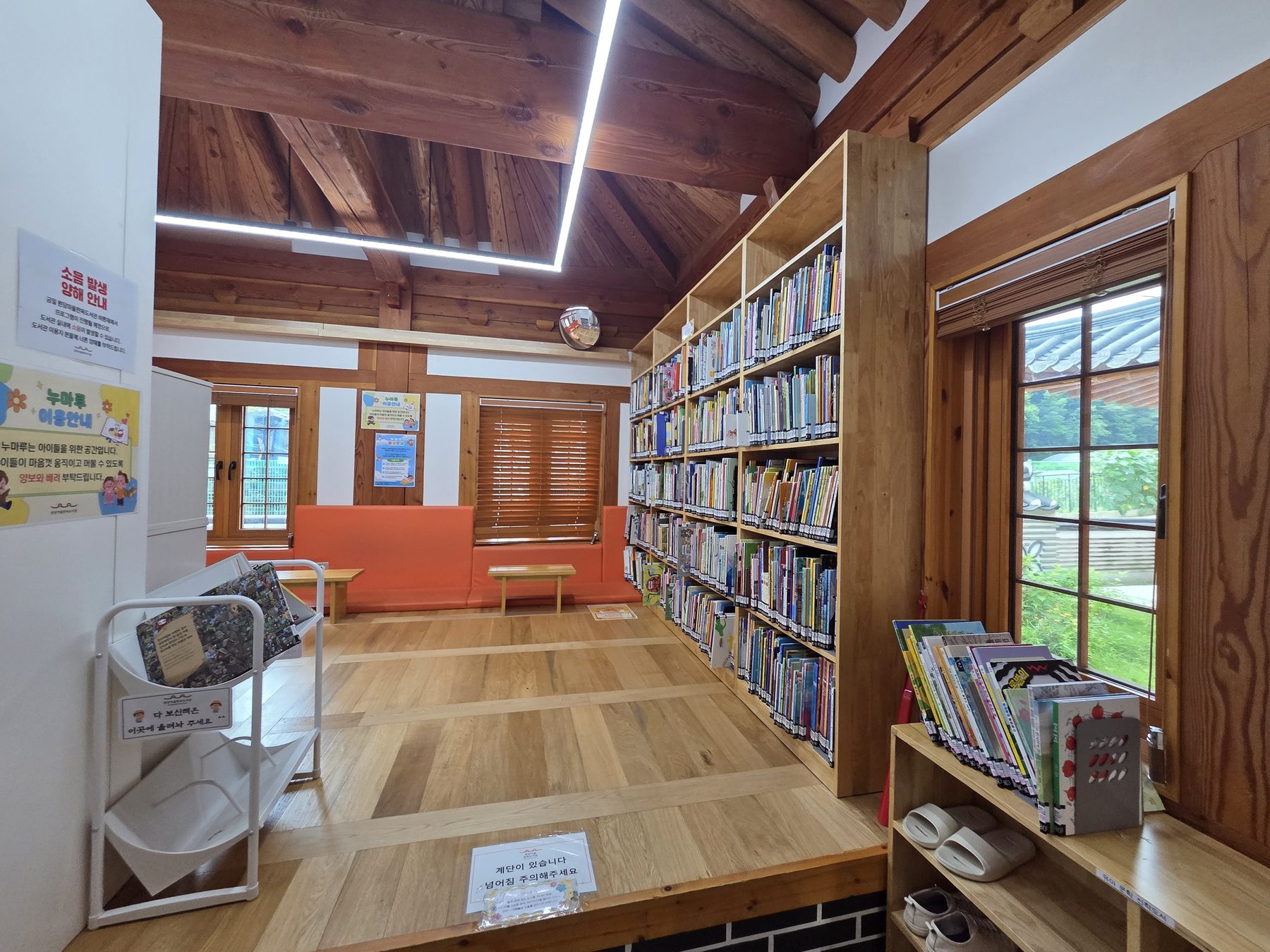
Elsewhere there are long wooden desks under the windows with small table lamps, good for a laptop and a long session of work. There is also a children's wing with an orange-cushioned reading nook, which stays lively without disturbing the rest of the building.
The chairs facing the crape myrtle
My favorite spot is a row of armchairs and small round tables lined up along the glass, facing the inner courtyard. In the middle of the courtyard stands a crape myrtle, baerongnamu in Korean, which blooms pink through much of the summer. You sit in a soft chair, the eaves of the hanok frame the view, and the tree does the rest.
The courtyard itself is closed to visitors to protect the plants, so this is a view to enjoy through the glass. That restriction helps: the garden stays untouched, and the room stays quiet.
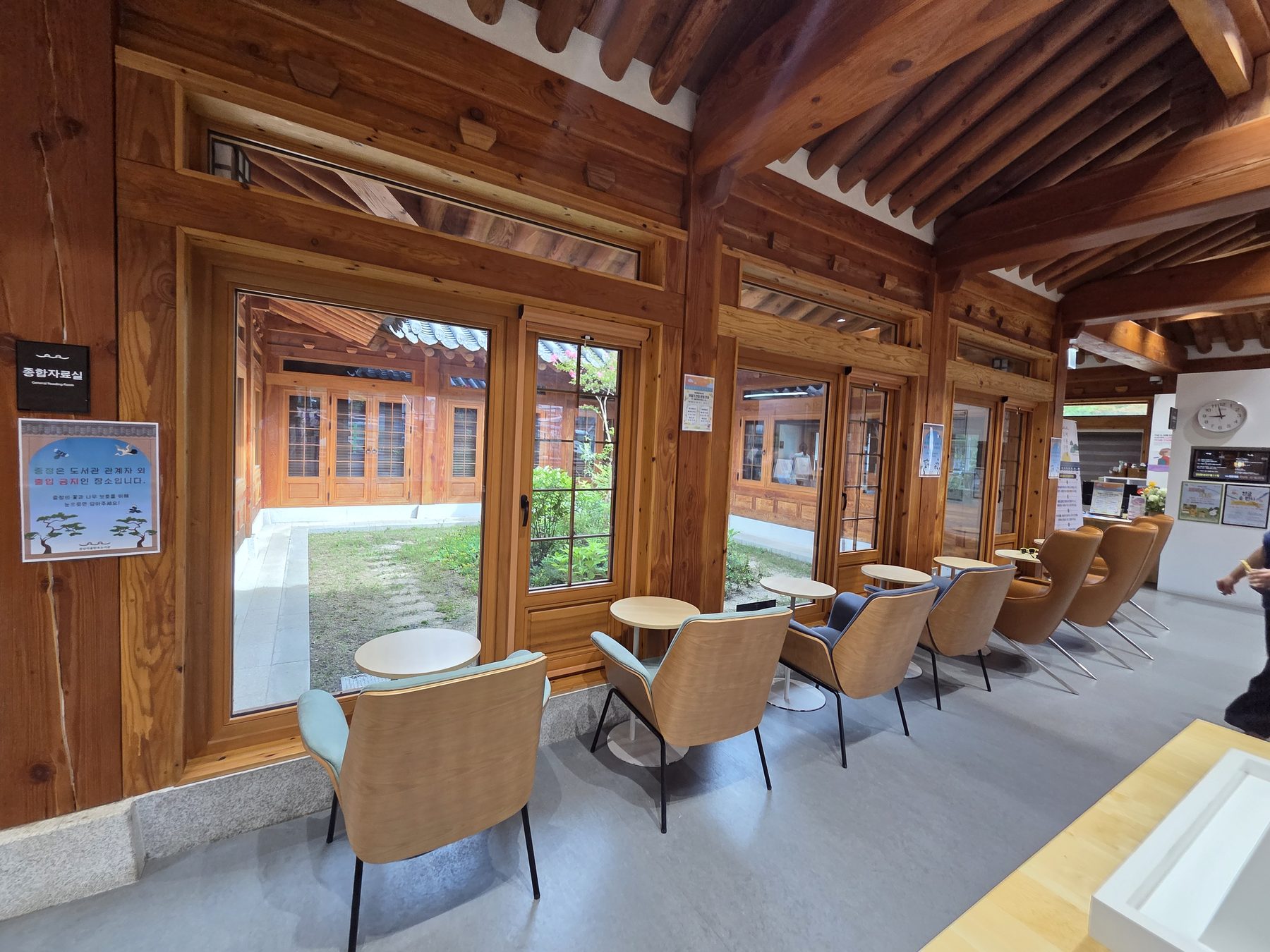
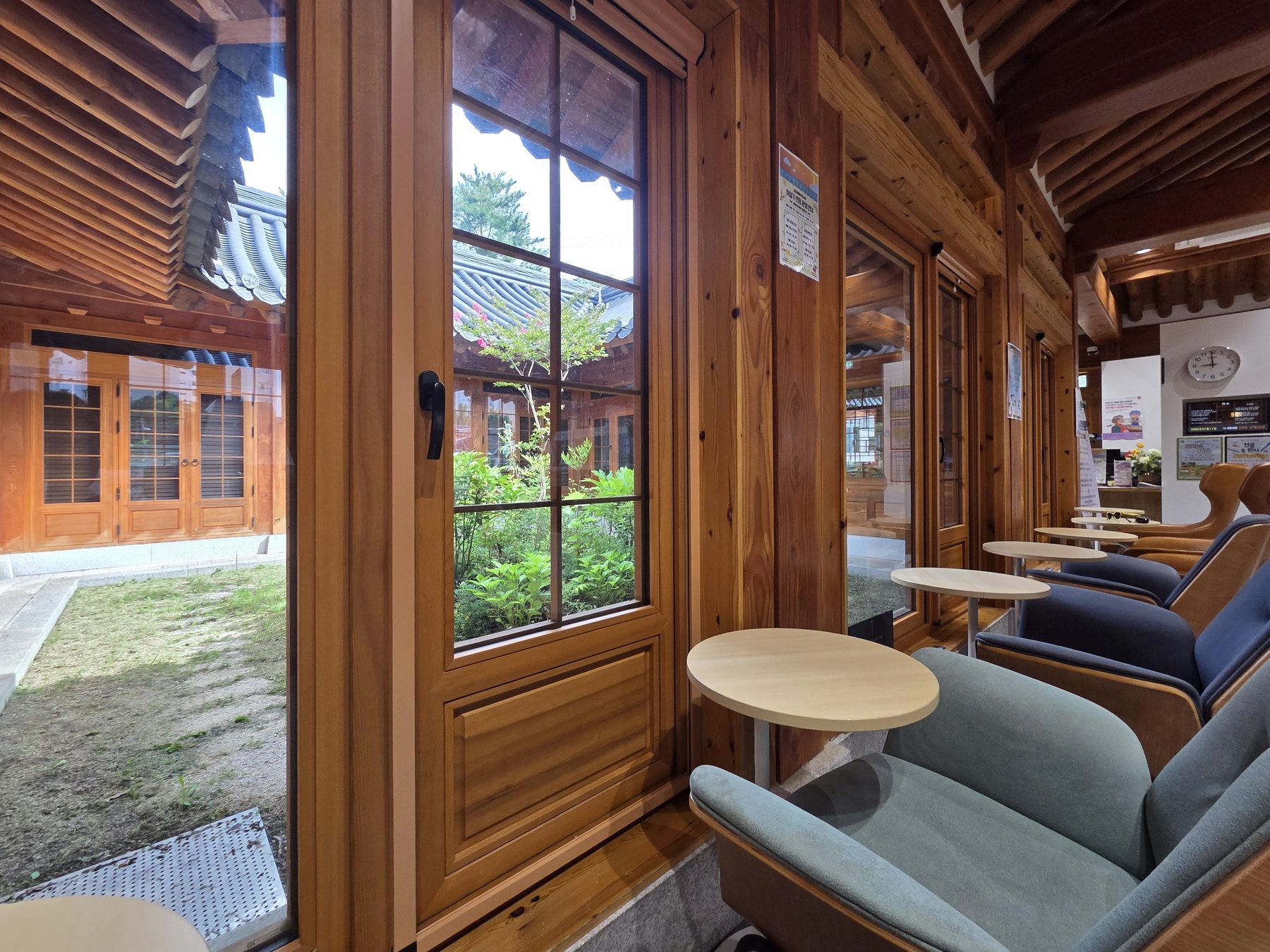
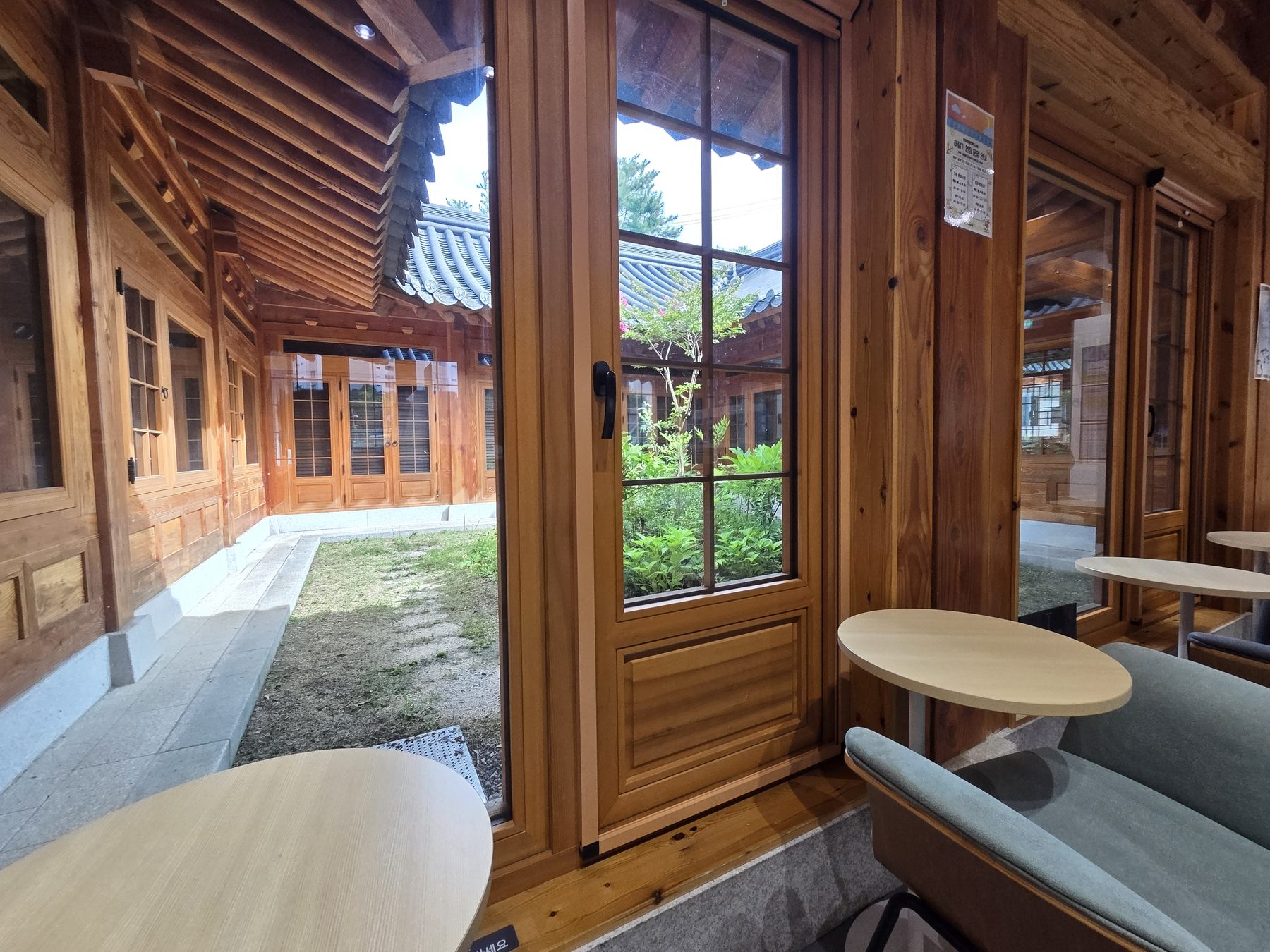
I spent one afternoon at the desk by the courtyard window with a printed manuscript, and it was one of the more productive afternoons I've had in Seoul.
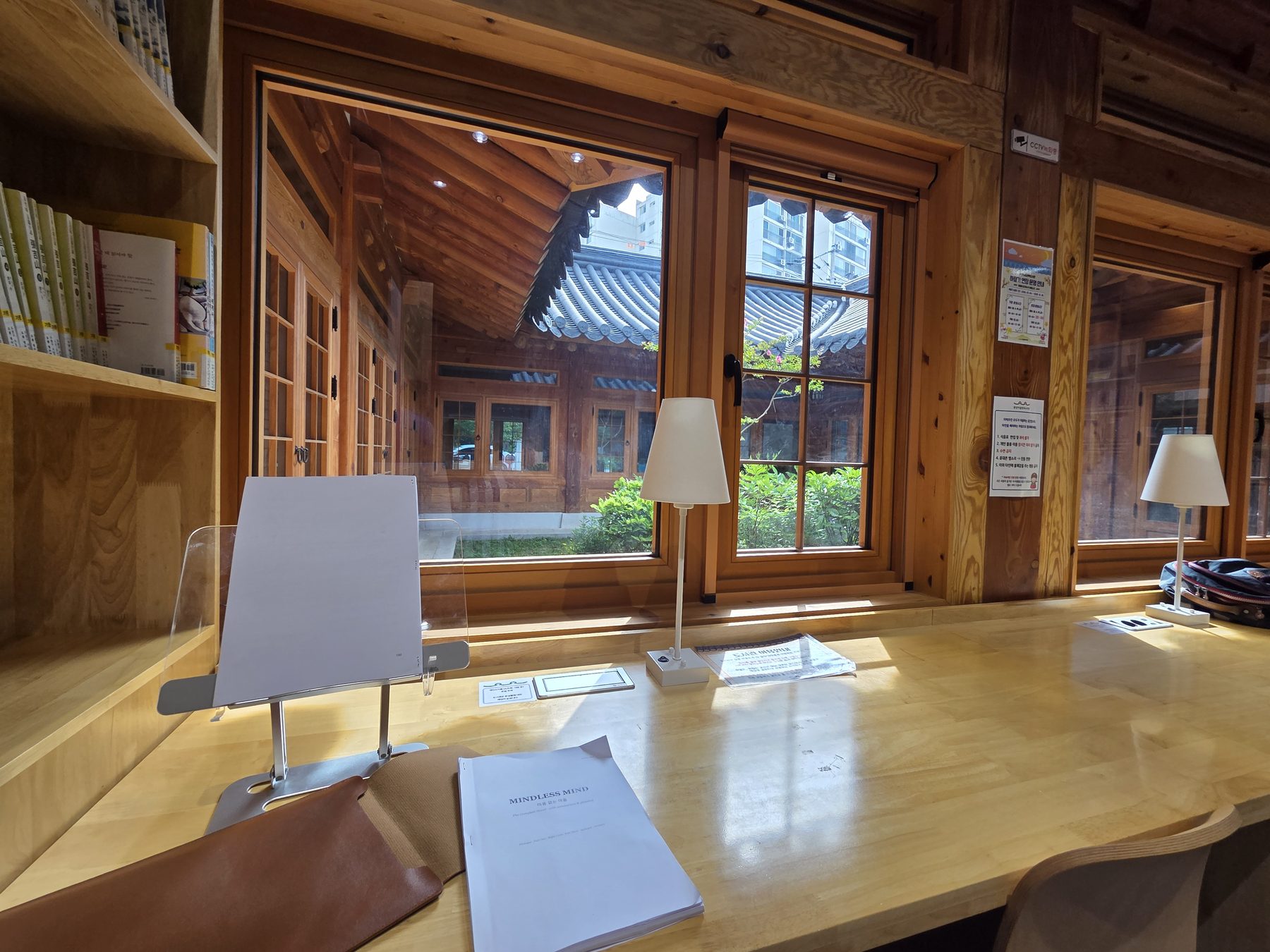
A small detail I appreciated
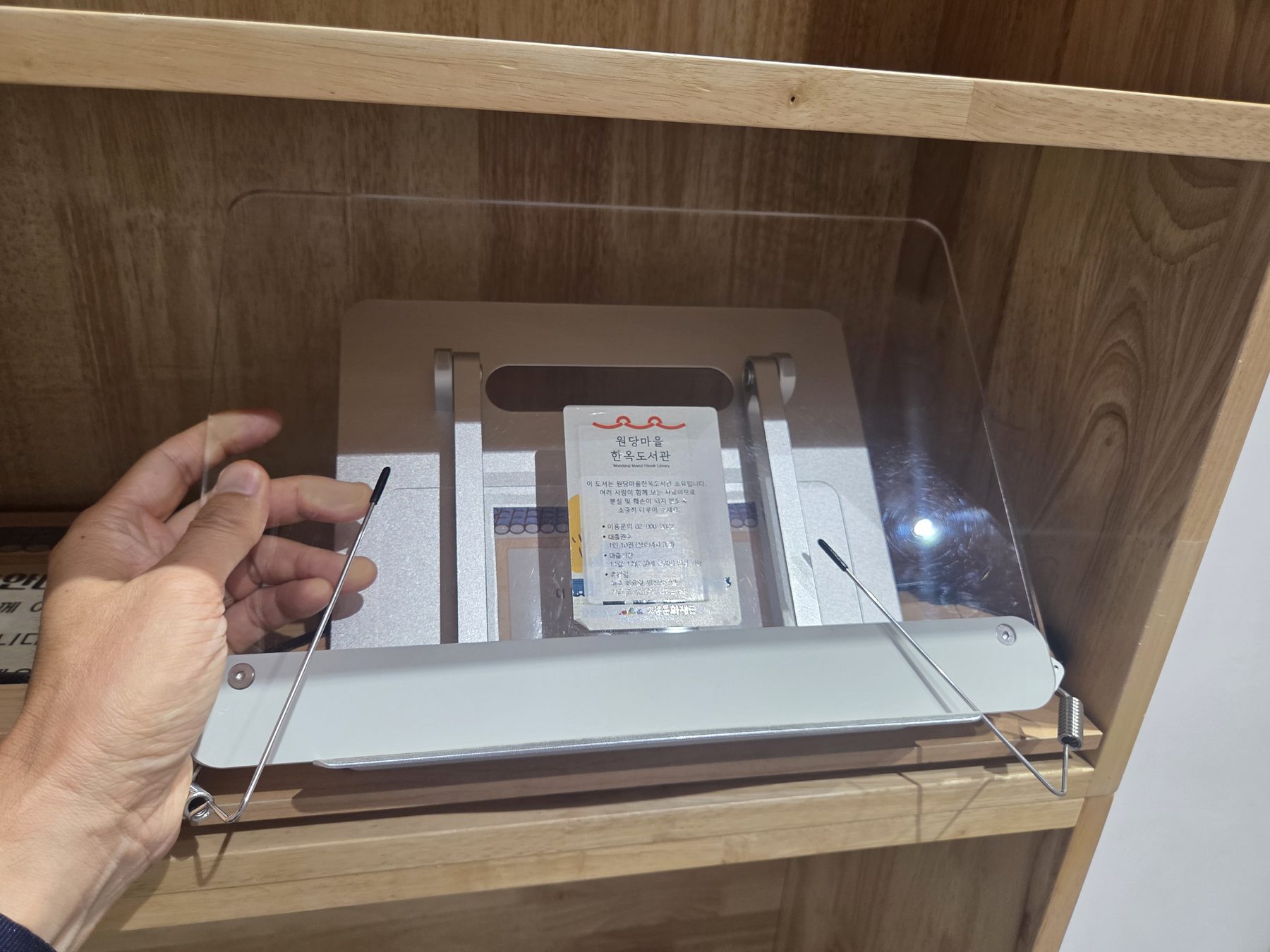
The library keeps shared book stands at the desks, so there's no need to carry your own. If you read heavy hardcovers or work from printed drafts, it makes a long session easier on your neck.
Walks between chapters
The best thing about this library may be what surrounds it. When your eyes get tired, you are only a few minutes from several places worth a stroll.
- Wondangsaem Park
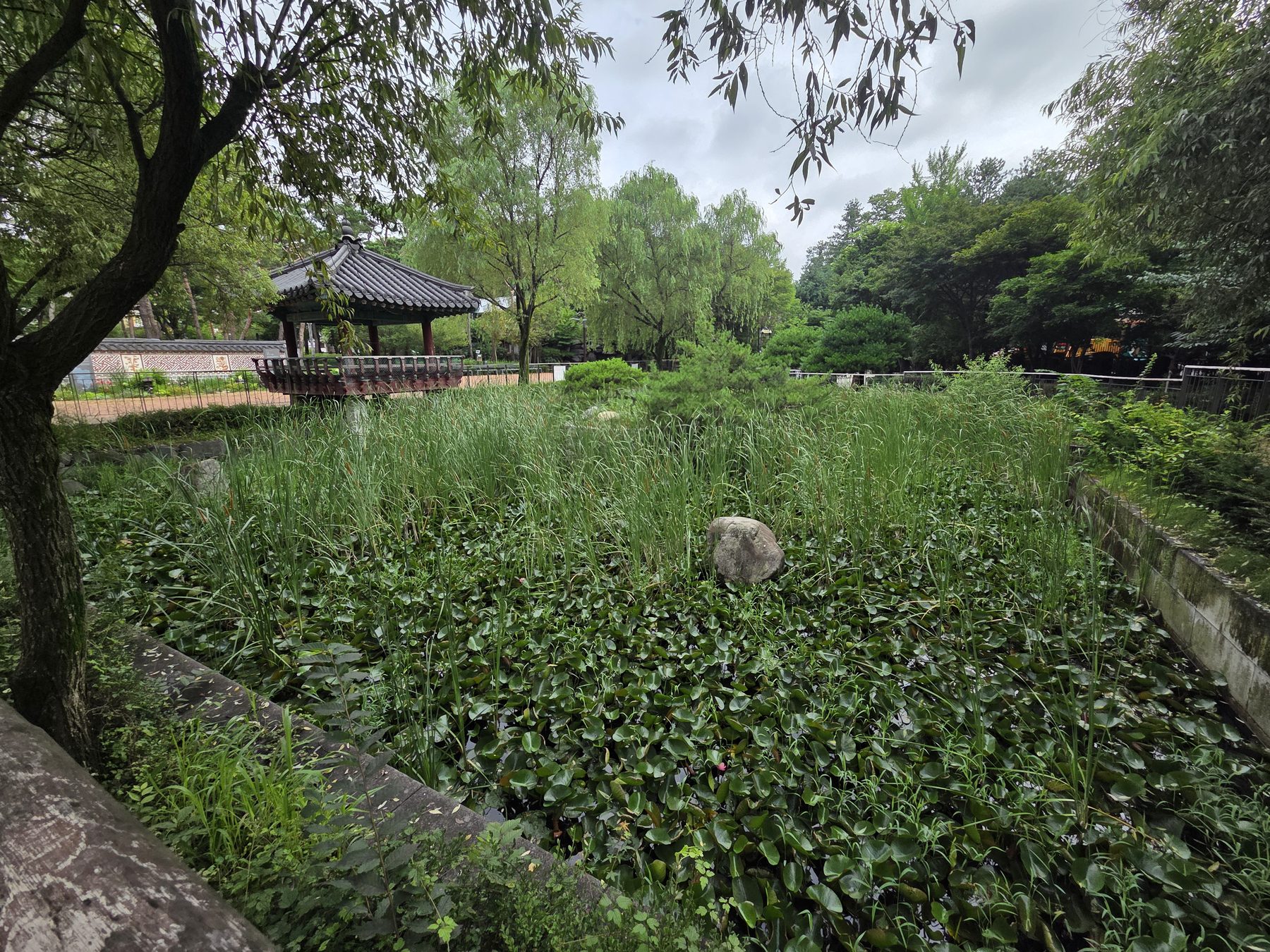
- 원당샘공원 — right next to the library, with an old spring, a pond full of water lilies and reeds, and a pavilion.
- Ginkgo tree
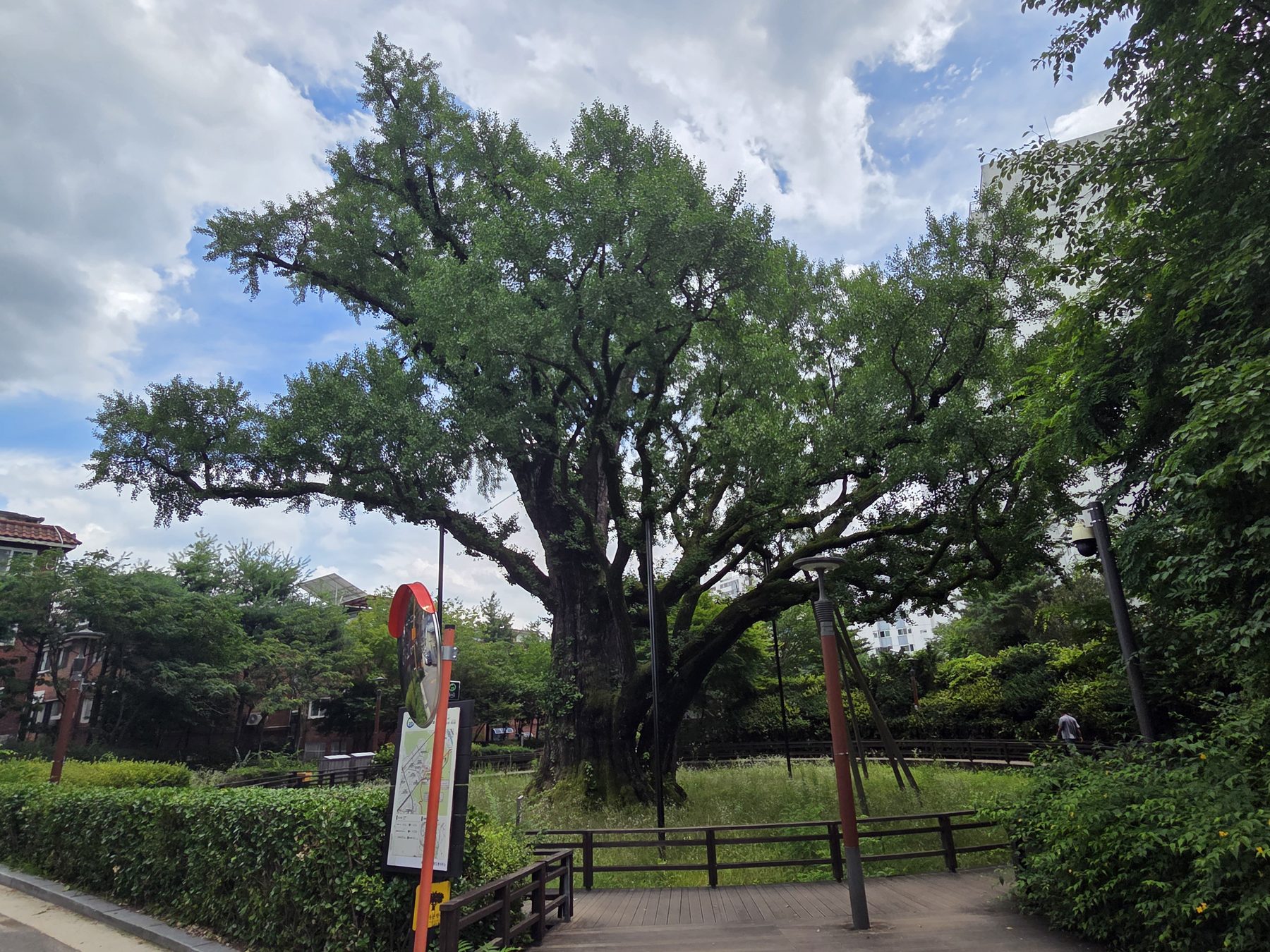
- 방학동 은행나무 — a giant estimated at around 600 years old, one of the oldest ginkgos in Seoul. In late October and November it turns gold.
- Literary museum
- 김수영문학관 — dedicated to one of Korea's major modern poets.
- Dulle-gil
- 북한산 둘레길 — the trail that circles Bukhansan National Park passes through the neighborhood, so a short forest walk is always an option.
You can read for an hour, walk to the ginkgo, return to your chair, and repeat. A day here feels much slower than its location in a city of ten million would suggest.
Visiting
- Address
- 17 Haedeung-ro 32ga-gil, Dobong-gu, Seoul
서울 도봉구 해등로32가길 17 - Hours
- Mar–Oct: weekdays 9:00–20:00, weekends 9:00–17:00
Nov–Feb: weekdays 9:00–18:00, weekends 9:00–17:00 - Closed
- Every Tuesday, and public holidays other than Sundays
- Admission
- Free, with free parking
- Opened
- May 2022
- Best season
- Autumn for the golden ginkgo; summer for the crape myrtle in bloom
Hours can change, so check the Dobong-gu library website or a map app before you go. Naver Map and Kakao Map work best in Korea.
Practical details from ktriptips.com and Seoul Media Hub. Photos taken in July 2026.