
Reading Korea · Poets · Spain & Korea
Kindred Gestures: Lorca and Baek Seok
Two poets who never met and shared no language made the same set of choices, and were punished for them from opposite directions.
1936: A Beginning and an Ending
In January 1936, a twenty-three-year-old journalist in Seoul paid to print one hundred copies of a poetry collection. It was his first and last: Sasum (Deer). Seven months later and nine thousand kilometers away, on a hillside outside Granada, Federico García Lorca was dragged from his hiding place and shot. He was thirty-eight.
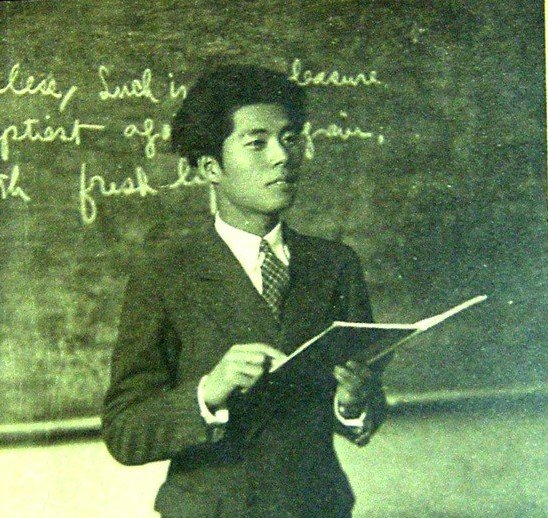
In the very year one poet stepped onto the stage, the other was dragged off it. Baek Seok (1912–1996) and Lorca (1898–1936) never met, never read each other, and wrote in languages that share nothing. Yet the longer I read them side by side, the more their lives seem to rhyme.
Both made the speech of a remote province sound like the newest thing in the world. Both were dandies educated in a great city, and legends among their fellow poets. And both were erased by the ideological wars of the twentieth century — from opposite sides — only to return at almost the same time.
Home as Avant-Garde
Lorca was born in Fuente Vaqueros, a farming village on the fertile plain outside Granada, the son of a prosperous landowner. Baek Seok — born Baek Gi-haeng — came from Jeongju in North Pyongan, at the far end of the peninsula as seen from Seoul.
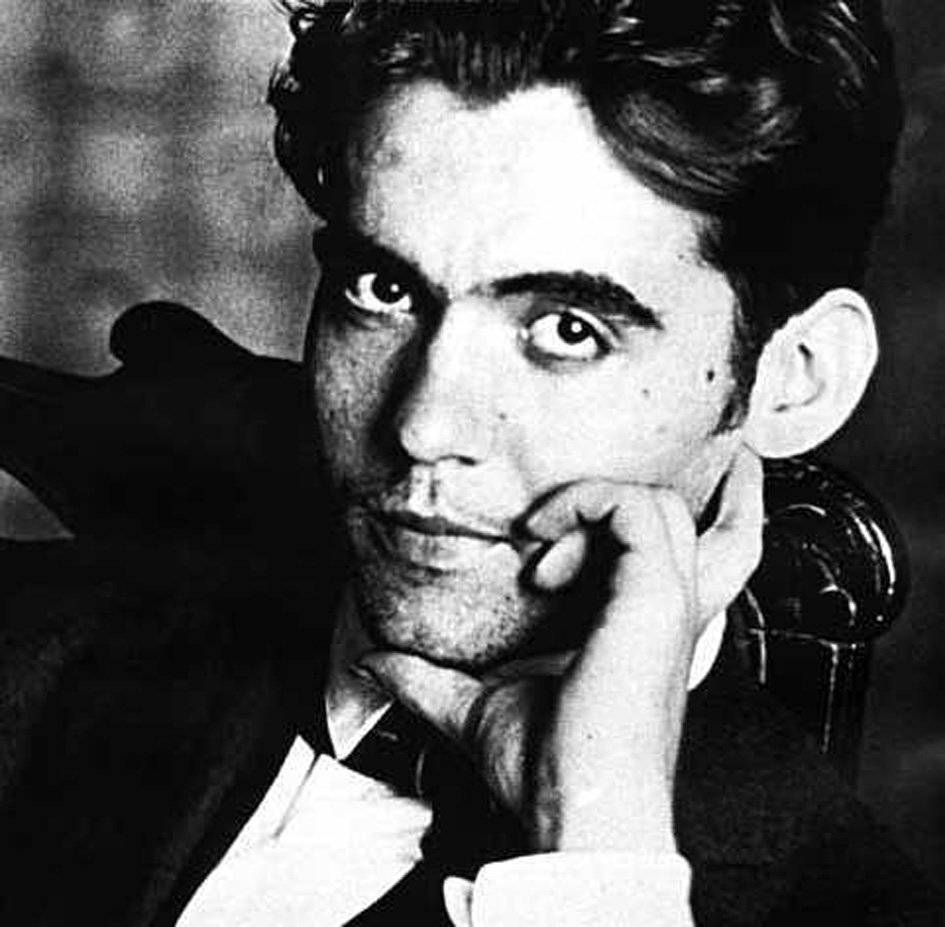
How each handled his roots is the heart of what they share. Lorca drew on Andalusian folk song, the cante jondo of flamenco, and the world of the Roma, and poured them into the romance — Spain's traditional narrative ballad — to make the Romancero gitano (Gypsy Ballads, 1928). Its famous refrain, “Verde que te quiero verde” (green, how I love you green), sounds like a nursery rhyme yet feels as fresh as a surrealist painting.
Baek Seok did something similar with the Pyongan dialect. His poems are crowded with regional words: village dishes like mui-jingge-guk, a radish soup cooked with shrimp; holiday games like sumgulmakjil (hide-and-seek) and joajil (jacks); the old shaman grandmother of Gajeurang House; and aunts known only by their villages, Aunt Sinri and Aunt Tosan, gathered around the holiday table. Many readers today cannot get through them without notes. Yet the effect is never quaint. The old words are placed with cinematic precision, and they feel startlingly modern.
For both poets, local color is not nostalgia. It is a technique — a way of making language strange again.
Two Lines, Two Grammars
If I had to show each poet's genius in a single line, I would choose two sentences that push the beauty of their languages to the limit.
deshojar a la luna!Federico García Lorca, “Si mis manos pudieran deshojar,” Libro de poemas (1921)
Put it into English and the difference is plain: If only my fingers could pluck the petals from the moon! English needs a verb and its object — pluck + the petals. Spanish needs one verb: deshojar, built from des- (removal) + hoja (leaf, petal) + -ar. The object lives inside the verb, so the action and the thing acted on arrive in a single stroke.
| Spanish: one verb | English: verb + object |
|---|---|
| deshojar | pluck the petals |
| desplumar | pluck the feathers |
| descascarar | peel the shell |
And because Spanish speakers call the game of pulling petals one by one — “loves me, loves me not” — deshojar la margarita, the moon quietly becomes a daisy in a lover's hand.
The little daughter loved the bellflowers, and so she went to a stone grave. Here the fusion happens between verb and conjunction. English needs a separate word, “and so.” In 좋아서 (joaseo), the connective ending -아서 is welded straight onto the verb. With no word standing between the two clauses, the grammar glides in a single breath from loving flowers to lying under stones.
The word “died” never appears. The child's death is told as a consequence of loving flowers — in a child's logic, or in the logic of a mother who cannot bring herself to say it. The sentence is as clear a fact as the bellflowers blooming by hillside graves, and unbearably painful.
One line melts a noun into a verb; the other melts a conjunction into a verb. Both are nearly untranslatable, and both show a poet working at the exact point where only his own language can go.
Seeing Home from the Capital
Paradoxically, both men found home by leaving it. In 1919 Lorca moved to Madrid's Residencia de Estudiantes, a hothouse of liberal ideas where he befriended Salvador Dalí and Luis Buñuel. Baek Seok went further. He studied English literature at Aoyama Gakuin in Tokyo, then the most cosmopolitan city in East Asia, before returning to work at the Chosun Ilbo in Seoul.
Both came home with an outsider's eye. The village feast, the gypsy song, the grandmother's kitchen became material for poetry only after each had stood in a modern city and looked back.
Both were also unmistakable dandies. Lorca played piano, drew, and sang folk songs, and became the center of any room. Baek Seok was Seoul's archetypal “modern boy”; contemporaries remembered his tailored suits and swept-back hair as much as his poems. Later, each carried that urbane sensibility into a kind of exile. Lorca went to New York in 1929–30, the source of Poet in New York. Baek Seok crossed into Manchuria in 1940 and wrote his loneliest and finest poems, among them “From the North” and “There Is a White Wall.”
Poems Passed from Hand to Hand
Neither poet's fame depended on printed books. Lorca was famously indifferent to publishing. Many of his poems spread first through his own readings, and audiences knew lines by heart before they ever appeared in print.
Baek Seok's single book was so rare that it became a legend in itself. Sasum was printed in just one hundred copies at a deliberately high price, and vanished almost at once. The young Yun Dong-ju, unable to find a copy, borrowed one, copied it out by hand, and treasured that transcription.
Here, too, something links the two. Poems drawn from oral tradition — ballads, folk songs, village speech — were themselves first passed on by voice and by hand, as folk songs are.
Silenced from Opposite Sides
Both poets' literary journeys were cut short, swept up in great ideological currents. Lorca's life was ended by the right. In August 1936, in the first weeks of the Spanish Civil War, rebel (Nationalist) forces arrested him in Granada and executed him near Víznar. His sympathy for the Republic, his liberal circle, and rumors about his homosexuality all made him a target. His remains have never been found.
Baek Seok was silenced by the left, then erased by the right. After liberation in 1945 he stayed in his hometown in the north. Under the new regime he translated Russian literature and wrote poems for children, but his quiet lyricism never fit socialist realism. Around 1959 he was sent to a collective farm in Samsu, a remote county near the Chinese border, and all but vanished from literature.
Meanwhile, South Korea banned the works of writers who had stayed in the North. For decades his was a name that could not be printed in Seoul. Even his death was a mystery: long assumed to have died in the 1960s, he was later found to have lived on, unknown, until 1996.
One poet with no known grave; the other with no known date of death. Each, in his own way, was forced to disappear.
Returning with Democracy
Both poets came back when democracy came back.
Under Franco, Lorca's name was handled with official unease, and the circumstances of his death were never openly discussed. Only after Franco died in 1975 and Spain moved to democracy was he fully reclaimed as a national poet. In South Korea, in the wake of the 1987 democratization, the ban on writers who had gone to or stayed in the North was lifted in 1988. Baek Seok was rediscovered almost overnight, and today he is often named the poet other Korean poets love most.
Two transitions to democracy, a decade apart, each brought back a poet the old order had tried to bury. It is hard to find a clearer example of what a free society chooses to remember.
Green, and White
Lorca's color is green. In “Romance sonámbulo” (Sleepwalking Ballad), green is the color of wind and branches, and also of the gypsy girl dreaming at her railing — her flesh, her hair. In the end she is found as a corpse floating on the water of a cistern. His green is a color in which life and death share one body, and it overlaps with his own life, cut off at thirty-eight.
Baek Seok's color is white. The white stone of his pen name, Baek Seok (白石); the snow falling on the night he longs for Natasha; and the bare white wall he faced in his rented room in Manchuria. On that empty wall, his poverty, loneliness, and longing are projected as if on a screen. And white was also the color of a blank — the place in Korean literary history where his name should have stood for decades.
A green cut off in its prime, and a white blank left by an erased name. The two colors are the shapes of the two silences these poets endured. And both, in the end, were painted back in.
I do not want to force the comparison. Their poems carry different colors. But as a reader and publisher who loves Korean, Spanish, and English literature alike, I take comfort in the fact that the same pattern could unfold on opposite sides of the globe. A young man from the provinces goes to the capital, learns to see home with new eyes, and writes it down in home's own words. And on the page, he outlives everyone who tried to silence him.